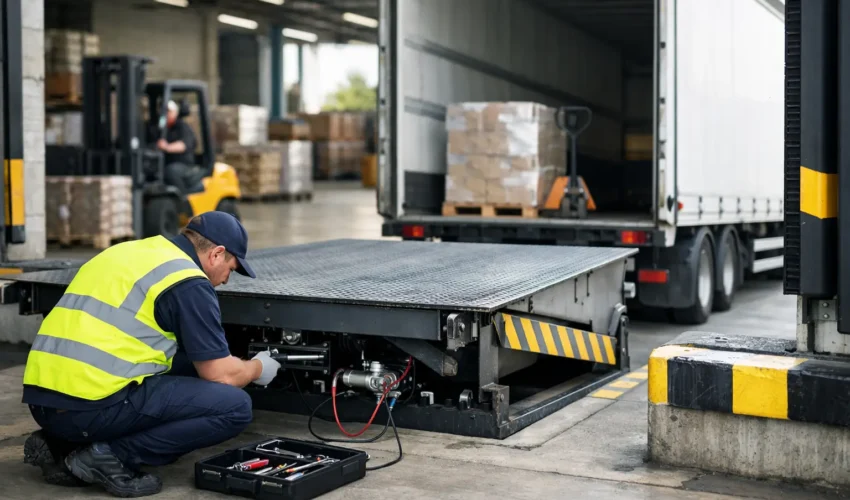
A failed dock leveller at 7am can throw off an entire day’s deliveries before the first pallet is even moved. For warehouses, retail distribution sites and industrial units, loading bay equipment maintenance is not a box-ticking exercise. It is what keeps vehicles moving, staff safe and goods flowing without costly hold-ups.
When a loading bay stops working properly, the problem rarely stays in one place. Missed loading slots affect transport schedules, waiting lorries build up on site, and staff start finding workarounds that create new safety risks. That is why planned maintenance matters – not just for compliance, but for day-to-day operational control.
Why loading bay equipment maintenance matters
Loading bays work hard and often in poor conditions. Dock levellers take repeated impact from vehicle movement and heavy loads. Dock shelters and seals are exposed to weather, tears and constant contact. Industrial doors at the bay open and close all day, with motors, springs, guides and safety features all under strain.
Because these systems are interconnected, one fault can quickly affect another part of the bay. A misaligned door can slow loading. A worn leveller lip can create an unsafe transition point. Damaged bumpers can increase impact on the building itself. Good maintenance catches these issues early, when the repair is simpler and far less disruptive.
For facilities managers and site operators, the value is practical. Fewer emergency callouts. Less unplanned downtime. Better protection for staff, stock and vehicles. Longer service life from the equipment already in place.
What equipment should be included
A proper maintenance plan should cover the full loading bay area rather than treating each item in isolation. In most commercial and industrial settings, that includes dock levellers, vehicle restraints where fitted, dock shelters, dock seals, loading bay doors, traffic lights, control panels, safety interlocks and bay buffers.
The exact scope depends on the site. A high-volume distribution depot will have very different demands from a smaller trade counter or a manufacturing unit with fewer daily vehicle movements. Some bays operate in clean, controlled conditions. Others face water ingress, dirt, forklift impact and constant exposure to the elements. Maintenance intervals should reflect the real level of wear, not a generic schedule copied from another building.
Common faults that planned servicing can prevent
Most loading bay breakdowns do not come out of nowhere. They build gradually through wear, missed inspections or minor damage left unresolved.
Hydraulic leaks are a common example on dock levellers. At first, performance may just seem slower or less consistent. Left alone, the leveller can become unreliable or fail completely. Hinges and pivot points can also wear over time, creating instability or poor alignment at the loading edge.
Electrical faults are another regular issue, especially where controls are exposed to dust, moisture or heavy use. A sticking button, failed sensor or damaged cable can take equipment out of service with little warning. In busy environments, impact damage is also frequent. Forklifts clipping frames, vehicles striking bay doors, or repeated pressure on worn buffers all shorten equipment life.
Planned servicing does not eliminate every fault, but it gives engineers the chance to identify deterioration before it becomes an urgent operational problem.
What good loading bay equipment maintenance looks like
Effective maintenance is more than a quick visual once-over. It should involve systematic inspection, adjustment, testing and servicing by engineers who understand how the bay operates under real site conditions.
Mechanical checks
Mechanical components need close attention because they absorb most of the physical strain. That includes checking hinges, lip operation, platform movement, springs, rollers, bearings, fixings and structural wear. Engineers should be looking for signs of fatigue, movement where there should be none, and friction where parts should run freely.
On loading bay doors, that also means checking tracks, curtain alignment, motor performance and safety brake systems where relevant. If a door is slowing down, catching or operating noisily, it usually points to wear that should be addressed before a failure occurs.
Electrical and safety testing
Controls and safety systems are just as important as the moving parts. A loading bay may appear operational while still presenting a safety risk if interlocks, emergency stops, sensors or warning systems are not performing correctly.
Testing should confirm that control panels respond as expected, safety devices activate properly, and any interdependent systems communicate correctly. Where bays include automatic doors or powered docking equipment, faults in one control circuit can affect the safe use of the whole area.
Wear parts and site damage
Some components are expected to wear and need periodic replacement. Seals tear, bumpers compress, cables deteriorate and fixings loosen. A good maintenance visit identifies what is normal wear, what is accidental damage and what is beginning to affect safe operation.
That distinction matters. Replacing a worn consumable at the right time is straightforward. Leaving it until it causes damage elsewhere usually leads to a bigger repair and more downtime.
How often should loading bays be serviced?
There is no single answer that suits every premises. Frequency depends on usage, environment, equipment age and the consequences of failure.
A bay handling frequent daily deliveries will need more attention than one used only a few times a week. Older equipment may still be reliable, but it often benefits from closer inspection because tolerances, wear and parts availability can become more of an issue. Harsh environments also increase maintenance needs. Water, temperature changes, dust and impact all accelerate deterioration.
For many sites, a planned maintenance schedule of at least one or two visits a year is a sensible starting point. Heavier-use operations may need more frequent servicing. What matters is that the interval reflects risk and use, not just budget. Saving money by stretching servicing too far often results in more reactive costs later.
The cost of reactive maintenance only
Some businesses wait until something breaks and then call for repair. On paper, that can look cheaper. In practice, it often costs more.
Reactive maintenance means faults are discovered at the point of failure, when operations are already affected. Emergency attendance, temporary workarounds, delayed goods and interrupted access all add to the true cost. It also limits options. During an urgent breakdown, the priority is getting the bay functional again, not planning the most efficient repair.
Planned maintenance gives a site more control. Engineers can flag developing issues, recommend repair windows and carry out work before a breakdown forces the decision. That is especially valuable on sites where loading access directly affects customer service or production schedules.
Compliance, safety and duty of care
Loading bays are high-risk working areas because they combine moving vehicles, powered equipment, pedestrians and heavy goods in one space. Maintenance supports safer operation by making sure equipment performs as intended and visible defects are not ignored.
It also helps businesses demonstrate that equipment is being managed responsibly. That matters for internal safety procedures, insurance expectations and general duty of care to staff, visitors and contractors. If an incident happens, poor maintenance records can quickly become part of the problem.
For many operators, the key point is straightforward. If a bay is essential to the building, its condition should never be left to guesswork.
Choosing the right maintenance support
Not every contractor approaches loading bay servicing with the same level of detail. The best support is practical, responsive and based on what the site genuinely needs.
Look for engineers who can assess the whole bay environment rather than just one product in isolation. A door issue may be linked to impact, alignment or control faults elsewhere. A leveller problem may point to wider wear, poor servicing history or misuse on site. Proper diagnosis saves time and avoids repeat callouts for the same underlying issue.
Local responsiveness also matters. If a bay goes down, waiting days for attendance is rarely acceptable. Businesses across Lanarkshire and Glasgow tend to value maintenance partners who know the area, understand the pressures of commercial sites and can move quickly when an urgent repair is needed. That is where a specialist provider such as Door Systems Scotland can add real value – combining planned servicing with fast support when things do go wrong.
When to act before the next failure
If loading bay equipment is becoming noisy, slower, uneven, damaged or unreliable, that is the point to act. Not after the next missed delivery slot. Not after staff start avoiding one bay because it is awkward to use. Early intervention nearly always gives you more options and lower repair costs.
A well-maintained loading bay does not draw attention to itself, and that is exactly the point. Vehicles arrive, goods move, doors open, levellers operate and the working day carries on. For any site that depends on regular deliveries or dispatch, keeping it that way is one of the simplest ways to protect productivity.