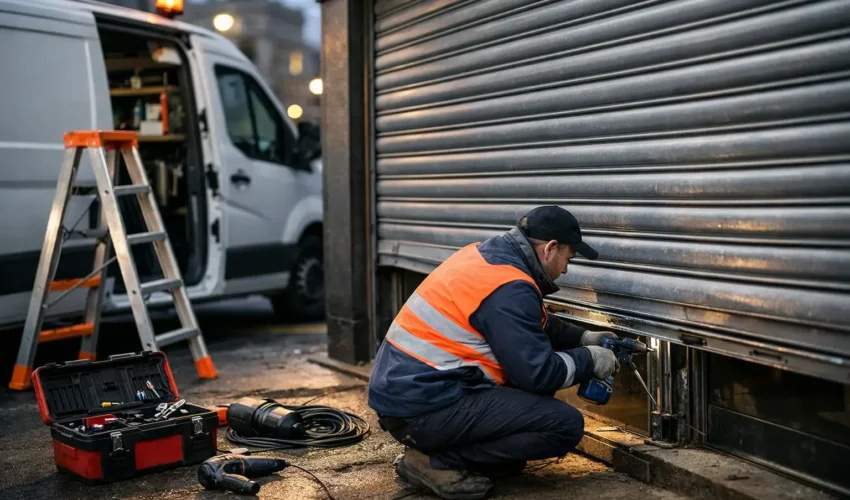
A roller shutter stuck half open at 6am can stop a delivery before it starts. A shutter that will not close at the end of the day can leave stock, equipment and staff exposed. When this happens, emergency shutter repair Glasgow businesses can depend on is not simply about getting a door moving again. It is about making the premises safe, restoring security and limiting the disruption to trade.
For warehouses, retail units, medical centres, workshops and managed commercial properties, a failed shutter is an operational issue that needs a calm, practical response. The right action in the first hour can protect people and prevent a manageable fault becoming a more costly repair.
Treat a failed shutter as a safety and security issue
A damaged or unresponsive shutter can be heavy, unstable and electrically powered. If it has come off its guides, is hanging unevenly, has visible damage to the curtain or is making grinding noises, keep people clear of the opening. Do not ask staff to lift it manually, force it with a vehicle, or repeatedly press the control button in the hope that it will reset.
If the door is partly open, assess the immediate risk without standing beneath it. Move vehicles, pallets and pedestrians away from the area where possible. Where it is safe to do so, use an alternative entrance or loading point and prevent unauthorised access to the affected doorway.
A shutter that cannot close also needs a temporary security plan. This may involve moving high-value stock away from the opening, increasing on-site supervision or restricting access to the area until an engineer arrives. The appropriate measure depends on the building, the door position and how exposed the premises are. A street-facing shopfront requires a different response from an internal warehouse shutter.
When to call for emergency shutter repair in Glasgow
Not every shutter fault needs an out-of-hours callout. A minor issue with a secondary internal door may be able to wait until normal working hours if the area remains safe and secure. However, urgent engineering support is the sensible choice when the fault creates an immediate safety, security or trading problem.
Call for emergency assistance if the shutter is stuck open and the building cannot be secured, has dropped or become visibly unstable, has been damaged by impact, prevents essential deliveries or dispatches, or blocks a required pedestrian or fire escape route. Loss of power can also be urgent where there is no safe manual override and the door is critical to operations.
It is worth being precise when reporting the issue. Explain whether the shutter is open, closed or part way through its travel; whether anyone has been injured; whether a vehicle strike, attempted break-in or power issue preceded the failure; and whether there are unusual sounds, smoke or a burning smell. Those details help an engineer arrive prepared for the likely cause.
Do not keep operating a damaged door
Repeatedly cycling a faulty shutter can strain the motor, damage the control system or cause the curtain to travel further out of alignment. An impact-damaged door may look close to working but have bent guides, damaged end locks or a compromised barrel. Continuing to use it can turn a targeted repair into a larger replacement job.
If there is smoke, an electrical burning smell or damaged wiring, do not touch the controls. Isolate the area and seek urgent support. Electrical and mechanical faults need to be assessed safely, not improvised around by an untrained user.
What an emergency engineer will check
A competent emergency repair starts with diagnosis, not guesswork. The engineer will inspect the curtain, guides, bottom rail, barrel assembly, motor, safety devices, controls and power supply. They will also look for signs of collision damage, forced entry, wear in moving parts or a fault caused by the door’s operating environment.
Common causes include a curtain that has slipped from its guides, broken or worn components in the drive mechanism, a failed motor or control unit, damaged photocells or safety edges, and obstructions in the doorway. In busy loading areas, lorry or forklift contact is a frequent cause of bent guides and distorted shutter curtains. For externally fitted doors, wind, water ingress and corrosion can contribute over time.
The immediate aim is to make the door safe and secure. In many cases, that means repairing the fault on site, realigning the curtain, replacing a failed component or securing the shutter in a safe position. If a permanent repair requires parts that are not available during the callout, the engineer should explain the temporary measures, the likely next steps and any restrictions on using the door.
A straightforward fault can sometimes be resolved quickly. More extensive impact damage or a failed motor on a specialist door may take longer. Clear communication matters because a facilities manager needs to know whether to reroute deliveries, inform tenants, arrange security or plan around a follow-up visit.
Keep your operation moving while the repair is under way
A shutter failure rarely affects only one doorway. It can interrupt receiving, dispatch, customer access, staff movement and building security. Once the immediate area is controlled, consider which part of the operation is affected and what a safe workaround looks like.
For a warehouse, this could mean directing deliveries to another loading bay, changing the order of picks or using an alternative approved pedestrian entrance. For a retail premises, it may mean managing customer access through a side door and keeping the damaged frontage supervised. Property managers may need to advise tenants, building security and insurers where relevant.
Avoid creating a workaround that introduces another problem. Do not prop open a fire-rated door, block a designated escape route or use a doorway that is not designed for vehicle movements. A short delay is preferable to an unsafe arrangement that risks injury or compliance issues.
Take a few clear photographs from a safe distance before repairs begin, especially after impact damage or suspected criminal damage. Record the time of the fault, the last known normal operation and any staff observations. This can support internal reporting, insurance discussions and decisions about preventing a repeat incident.
The value of planned shutter maintenance
Emergency repairs are sometimes unavoidable. Accidental damage, component failure and attempted break-ins cannot always be predicted. Yet many urgent callouts begin with warning signs that were easy to miss in a busy working day: slower movement, rattling, a noisy motor, uneven travel, damaged guides or controls that work intermittently.
Planned maintenance gives an engineer the opportunity to identify wear before it causes a breakdown. A service visit should check the condition and operation of mechanical parts, electrical controls and safety features, while identifying issues that could affect reliable use. The right frequency depends on the door type, its age, how often it operates and the working environment. A high-use loading-bay shutter will usually need closer attention than a low-use internal security shutter.
Maintenance is not only about avoiding disruption. It also helps business owners budget for repairs, extend the useful life of the door and maintain safer access for staff, visitors and contractors. Keeping a clear service record is particularly useful for multi-site operators and managed properties where responsibility may be shared between occupiers and landlords.
Choose support that understands commercial doors
An emergency repair contractor should be able to work across industrial roller shutters, security shutters and associated access systems, rather than treating every fault as the same. The response should be practical: assess the risk, stabilise the situation, repair where possible and provide honest advice where replacement or further work is required.
Local coverage also makes a difference when time matters. Door Systems Scotland provides 24/7 emergency repair support for commercial and industrial door systems, with engineer-led assessments designed to get businesses trading securely again with as little disruption as possible.
Give the engineer the right information before they arrive
A short, accurate briefing can speed up diagnosis and make the site visit more efficient. Have the property address, contact name, door type, fault description and access arrangements ready. If you know the manufacturer, door dimensions, approximate age or whether the system is single-phase or three-phase, pass that on too, but do not delay the call if you do not have those details.
Mention any site restrictions such as delivery-yard access, height limits, security procedures, permits or the presence of asbestos, fragile roof areas or unusual hazards. If the failed shutter is on a shared property, confirm who can authorise work and who will meet the engineer. These small details help avoid delays when the priority is getting the entrance secure.
The best emergency response is measured rather than rushed. Protect the people around the door, keep the affected area controlled, and bring in a qualified engineer before a faulty shutter causes greater damage. Once the immediate issue is resolved, arrange a conversation about servicing or replacement if the door’s condition suggests it may fail again. That one follow-up step can save a great deal of pressure on the next early shift or late closing time.