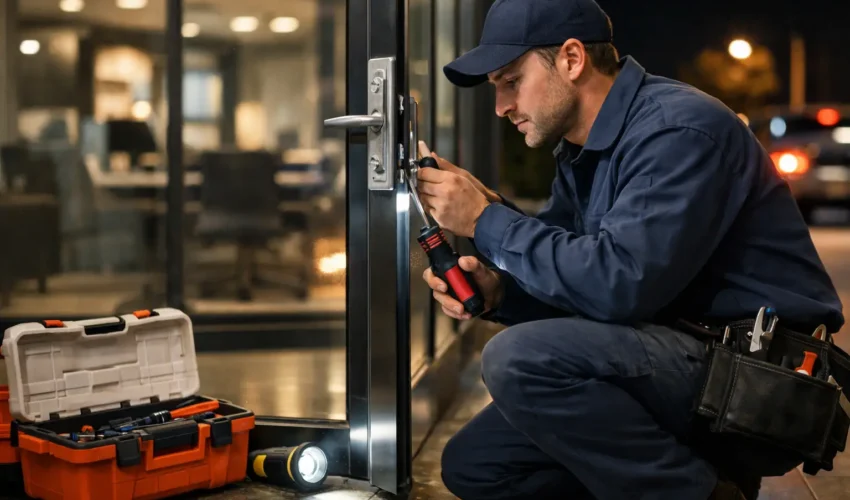
A shutter that will not close at 10pm is not a small issue you can leave until morning. It leaves stock exposed, staff concerned, and the next working day at risk before it has even started. That is exactly why 24 hour emergency door repair matters for commercial and industrial premises – when a door fails, security, safety and operations are all affected at once.
For most businesses, the door itself is only part of the problem. A failed roller shutter can stop you locking up. A faulty automatic entrance door can block customer access. A damaged loading bay door can hold up deliveries and put pressure on the whole site. The real cost is rarely just the repair bill. It is lost time, disrupted workflow, and the risk that a temporary fault becomes a bigger one if it is left too long.
When 24 hour emergency door repair is needed
Not every fault is an emergency, but many are. If a door is stuck open, cannot be secured, has suffered impact damage, is trapping access, or presents a safety hazard, it needs urgent attention. The same applies when a door is making severe grinding noises, has come off its guides, or the motor has failed during trading or shift change.
In commercial settings, timing matters. A retail unit with a damaged security shutter may not be able to close safely at night. A warehouse with a jammed industrial door may struggle to receive pallets at the start of the next shift. Medical centres, schools, depots and managed properties all face different pressures, but the common issue is the same – the door failure quickly becomes an operational problem.
There is also the question of compliance and public safety. Automatic doors, fire exits connected to access systems, and high-traffic entrances cannot simply be ignored because the site is busy. In some cases, a quick temporary measure is possible. In others, the right response is an engineer on site as soon as possible to assess, isolate and repair the issue safely.
The faults that cause the most disruption
Industrial and commercial door systems fail in different ways depending on their type, age and usage. Roller shutters often suffer from damaged slats, failed motors, worn brakes, limit switch issues or alignment problems. Automatic doors can develop sensor faults, control issues, damaged operators or problems with tracks and rollers. High-speed doors may stop due to curtain damage, safety edge faults or impact from site traffic.
A lot depends on how the door is used. A shopfront shutter that cycles twice a day faces very different wear from a warehouse door used constantly by forklifts and staff. Likewise, a door exposed to wind, water ingress or accidental impact may fail sooner than one in a more controlled environment.
Electrical faults are common, but they are not the only cause. Mechanical wear is just as disruptive and often more gradual. Bearings wear out, springs weaken, fixings loosen and tracks become damaged over time. One reason emergency callouts happen is that these smaller issues are easy to live with until the day the system finally stops.
What a fast response should actually look like
A proper emergency repair service is not just about answering the phone out of hours. It is about getting a competent engineer to site, diagnosing the fault properly and making the premises safe as a first priority. In many cases, the initial objective is to secure the opening, restore access where possible and prevent further damage.
That may mean a full repair on the first visit, or it may mean a temporary stabilisation followed by ordered parts and a return visit. The right approach depends on the fault, the door type and what parts are available. Any honest contractor should be clear about that. Promising an instant fix for every emergency sounds good, but it is not always realistic when specialist components are involved.
What matters most is clear communication. You need to know whether the door can be made secure, whether it can be safely operated, and what the next step will be. For a facilities manager or site supervisor, certainty is valuable. It helps you make decisions about staffing, deliveries, security and opening times.
Why specialist knowledge matters in emergency door repair
Not all door faults should be handled by a general tradesperson. Industrial shutters, sectional overhead doors, automatic sliding doors and docking systems are specialist products with moving parts, safety devices and electrical controls that need the right diagnosis. Emergency work carried out badly can create a second fault or leave the system unsafe.
That is especially true where access, entrapment protection or motorised operation is involved. A quick patch may get the door moving, but if limits are set incorrectly or damaged components are left in place, the site may still face downtime or risk later that day. Skilled engineers look beyond the immediate symptom and check the condition of the wider system.
This is where local, service-led support tends to make a difference. A contractor that regularly works on commercial and industrial doors understands the urgency, but also the practical needs of different premises. A retail frontage, distribution unit and healthcare setting each require a slightly different response, even if the issue is simply described as a door that will not open.
The balance between repair now and maintenance later
Emergency callouts solve urgent problems, but they also reveal patterns. If a door has failed once due to wear, missed servicing or repeated impact, there is a fair chance it will fail again. For many businesses, the smarter long-term move is to treat emergency repair as the point where maintenance planning starts.
That does not mean every site needs an extensive contract. It depends on usage, risk and the number of doors in operation. A single low-use shutter may only need periodic checks. A busy warehouse or multi-entrance commercial premises may benefit from planned maintenance that reduces reactive downtime and catches faults before they become urgent.
There is a cost trade-off here. Planned servicing adds a regular expense, but repeated out-of-hours breakdowns usually cost more over time, especially once lost productivity is considered. For businesses with high footfall, strict opening hours or ongoing vehicle movement, reliability often matters more than squeezing the last bit of life from worn components.
Choosing a 24 hour emergency door repair provider
When you are under pressure, it is easy to look only for the fastest number to call. Speed matters, but so do competence and accountability. A good provider should be able to work across the types of doors common in commercial premises, explain the issue clearly and give practical advice on whether the repair is temporary or complete.
It also helps when the service is genuinely regional rather than remote. Businesses in Lanarkshire, Glasgow and surrounding areas often prefer dealing with engineers who know the area, can reach site quickly and have an established service base nearby. That local presence usually leads to better follow-up as well, particularly when a return visit or ongoing maintenance is needed.
Ask straightforward questions. Can they repair industrial roller shutters and automatic doors? Do they carry out site surveys and give engineer-led recommendations? Can they support both reactive repairs and planned servicing? If the answer is yes, you are more likely to get continuity rather than a one-off fix with no wider support.
For many organisations, that is the real value of a specialist firm such as Door Systems Scotland. The benefit is not only emergency attendance. It is having a reliable contact who understands your site, your door systems and the operational impact when one of them fails.
What to do while waiting for the engineer
The first step is to keep people clear of the affected door if there is any risk of movement, collapse or entrapment. Do not force a motorised door manually unless you know the correct procedure. A door that has gone out of alignment or suffered impact damage can become more dangerous if it is pushed, lifted or run again.
If the opening cannot be secured, take practical temporary measures around access control and stock protection while you wait for attendance. If customer access is affected, clear signage and alternative routes can reduce confusion. If the door serves a loading area, inform drivers and site staff early so the rest of the operation can be adjusted.
Photos and a clear fault description can also help. If you can tell the engineer whether the door is stuck open, half open, making noise, showing an error, or has visible damage, that may speed up diagnosis before arrival. It will not replace a site inspection, but it gives the repair team a better idea of what they are walking into.
A dependable emergency repair service is about more than getting a door moving again. It is about restoring security, keeping people safe and helping your business get back to normal with the least possible disruption – which is exactly what a good commercial door partner should do.