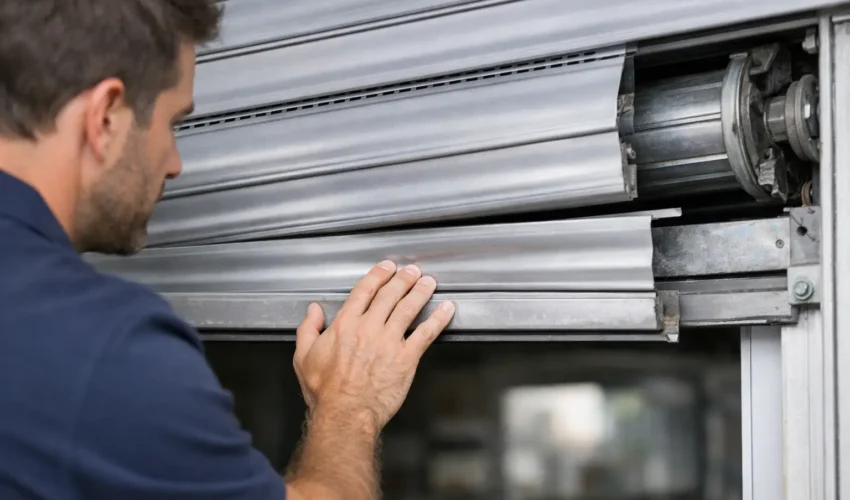
A roller shutter that stops halfway at 6:30 on a delivery morning is more than an inconvenience. If you are asking, “why is my roller shutter stuck”, the real issue is usually downtime, security risk, or restricted access for staff, stock, and customers.
In commercial settings, roller shutters tend to fail for a handful of repeat reasons. Some are simple, such as debris in the guides or a tripped power supply. Others point to wear in the motor, brake, springs, curtain, or control system. The key is knowing what can be checked safely on site and what should be left to a qualified engineer before the problem gets worse.
Why is my roller shutter stuck? The most common causes
A stuck shutter is usually a symptom rather than the fault itself. The curtain, barrel, guides, motor, safety devices, and controls all need to work together. If one part starts dragging, slipping, or losing power, the shutter may stop fully, move unevenly, or jam under load.
One common cause is an obstruction in the guide rails. Dirt, damaged guide brushes, loose fixings, packaging waste, and even a small impact can knock the curtain out of line. In warehouses and service yards, this happens more often than many sites realise. A shutter that has taken repeated knocks from pallets, cages, or vehicles may still operate for a while before finally binding.
Power issues are another frequent culprit. If the shutter is electrically operated, a local isolator may have been switched off, a fuse may have blown, or a control panel may have tripped. Sometimes the fault sits outside the door itself. A supply issue, moisture ingress, or a failed push button station can all leave the shutter unresponsive.
Mechanical wear also plays a major part. Roller shutters work hard, particularly on busy trade counters, loading areas, industrial units, and retail premises. Over time, bearings wear, barrels go out of alignment, end locks catch, and the curtain can deform. Manual shutters may suffer from spring fatigue, while powered shutters can develop brake or gearbox faults. These problems rarely improve on their own.
Then there are safety systems. Modern commercial shutters may include photo cells, safety edges, limit switches, and emergency stop functions. If one of these devices fails or detects a problem, the door may stop as designed. That can be frustrating when you need access quickly, but it is often preventing a more serious failure or injury.
What the shutter is doing can tell you a lot
The way the shutter behaves usually narrows the fault down.
If it does nothing at all, start by thinking power, controls, or a motor issue. If you can hear the motor but the curtain does not move, the problem may be mechanical – perhaps a failed brake release, damaged linkage, or curtain jam. If it starts to open and then stops at the same point each time, look for an obstruction, a damaged slat, or a guide issue.
A shutter that opens unevenly is a warning sign. One side may be catching, the barrel may be under strain, or the curtain may be winding badly. Keep forcing it and you can turn a repair into a more expensive callout.
Grinding, screeching, or clattering noises are also worth taking seriously. Roller shutters are not silent, but a change in sound often points to wear or misalignment. If the shutter has become noticeably slower, heavier, or rougher in operation, that usually means components are starting to fail.
Safe checks you can make before calling for repair
There are a few sensible checks site staff or a facilities manager can make, but only if this can be done safely and without dismantling anything.
First, look for obvious obstructions around the opening and inside the guides. Timber, shrink wrap, stones, and bent metal can all cause a jam. If the area is clear, check whether the power supply is on and whether any local isolator or fused spur has been switched off.
Next, look at the curtain itself. Are any slats visibly bent? Has the shutter taken an impact? Is one side sitting lower than the other? These visual clues matter because they often point to the part that has failed.
You can also check the controls. If there is a key switch, push button, or remote system, try to confirm whether the issue is with one control point or all of them. On some systems, an emergency stop may have been pressed accidentally. If your shutter has photo cells, dirt on the lenses can sometimes interrupt operation.
What you should not do is force the shutter, keep cycling it repeatedly, or start removing covers. A commercial roller shutter stores significant force. Springs, motors, and moving curtains can cause injury if handled incorrectly. Forcing a door that is already under strain can also damage the barrel, guides, and curtain assembly.
When a stuck shutter becomes an urgent problem
Not every failure is a full emergency, but some situations need a fast response.
If the shutter is stuck open, you may have a security issue. That matters for retail units, industrial stores, compounds, and any premises with valuable stock or equipment. If it is stuck closed, you may be blocking deliveries, vehicle movements, customer access, or fire escape routes, depending on the layout of the site.
A shutter that has jammed after an impact should also be treated carefully. The visible damage is not always the full picture. The guides may have twisted, fixings may have pulled loose, or the curtain may be under uneven tension. In that situation, trying to run the door again can make the opening unsafe.
This is where an engineer-led repair approach makes a difference. A proper assessment does more than get the shutter moving again. It checks whether the original fault has been resolved, whether the door is safe to return to service, and whether there is wider wear that needs attention.
Why roller shutters often fail at the worst time
It rarely feels random when a shutter fails during opening time, on a busy dispatch day, or just before close. In reality, peak use exposes existing weaknesses.
A door with worn components may cope with light use for weeks and then stop when demand increases. Cold weather can stiffen older mechanisms. Water ingress can affect electrics. Dirt build-up in external shutters often becomes more noticeable after poor weather or heavy site traffic. In practical terms, the shutter may not have failed that morning – it may have been deteriorating for some time.
That is why recurring minor issues should not be ignored. If a shutter has been sticking occasionally, needing a second press on the controls, or making more noise than usual, it is already telling you something. Planned maintenance is usually far cheaper than dealing with an emergency closure, a security gap, or lost trading time.
How to reduce the risk of it happening again
The best prevention is regular servicing matched to how the door is used. A lightly used security shutter on a small unit does not need the same maintenance approach as a high-cycle door on a distribution site.
Routine servicing allows engineers to pick up wear before it becomes a breakdown. That includes checking motor performance, brake function, guide condition, curtain alignment, safety devices, limits, controls, and fixings. It also creates a record of condition, which is useful for facilities management, budgeting, and site compliance.
Daily site checks help too. Staff do not need to diagnose faults, but they can report changes quickly. If a shutter starts dragging, hesitating, or sounding different, early action usually means a simpler repair.
For businesses across Lanarkshire and Glasgow, response time also matters. A local commercial door specialist can often get to site faster, assess the issue properly, and reduce the period your premises are exposed or inaccessible. That is particularly valuable where shutters protect stock, loading bays, plant areas, or customer entrances.
Why is my roller shutter stuck if it was serviced recently?
Sometimes a recently serviced shutter still develops a fault, and that does not always mean the service was poor. Doors can be damaged by impact the day after a visit. Electrical components can fail suddenly. Heavy use can accelerate wear between planned inspections.
That said, servicing should reduce the risk significantly when it is carried out properly and at the right frequency. If a shutter has repeated faults, it may be underserviced for its usage level, nearing the end of its serviceable life, or in need of more than a reactive fix.
In some cases, repair is no longer the most cost-effective route. If parts are heavily worn, the curtain is badly damaged, or breakdowns are becoming regular, replacement may make better operational sense. The right answer depends on age, usage, condition, and the cost of ongoing downtime.
If your roller shutter is stuck, treat it as a sign to act rather than a nuisance to work around. A quick, safe inspection and the right repair support can protect your building, your staff, and your day’s operations before a small fault turns into a bigger one.