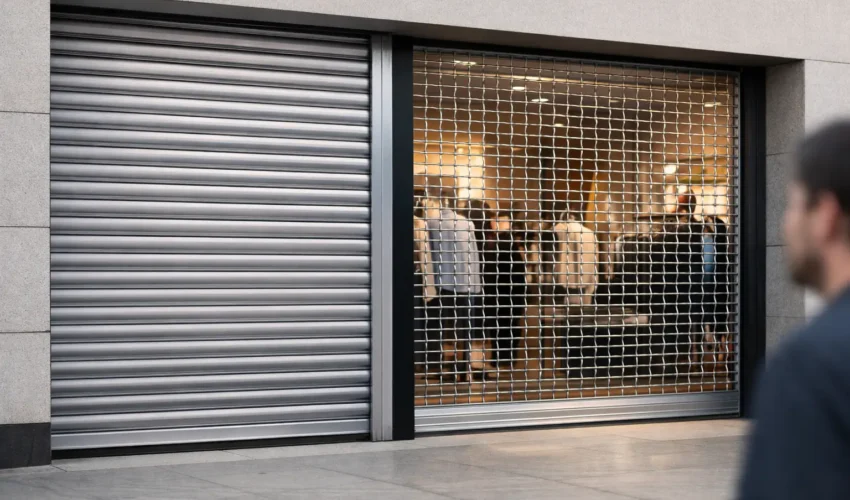
A smashed shopfront at 6am does more than damage glass. It delays opening, puts stock at risk and leaves staff dealing with a security problem before the day has even started. That is why security shutters for shops are not just a visual deterrent – they are part of keeping your premises trading, protected and manageable day to day.
For most shop owners and property managers, the real question is not whether a shutter is useful. It is which type will suit the premises, the risk level and the way the business actually operates. A shutter that looks the part but causes delays, noise, faults or access issues quickly becomes its own problem.
Why security shutters for shops matter
Retail premises face a different set of pressures from warehouses or industrial units. The frontage is exposed, glazing is vulnerable and opening hours often mean the building sits empty for long periods overnight. A good shutter adds a clear physical barrier, but it also supports insurance requirements, staff confidence and business continuity.
There is also a practical point that gets overlooked. After an attempted break-in or act of vandalism, businesses often lose time waiting on temporary boarding, replacement glazing and emergency attendance from multiple contractors. Properly specified security shutters for shops can reduce the chances of that disruption in the first place.
That said, more security is not always better if it comes at the expense of usability. The right system should protect the property without making opening up awkward, creating excessive maintenance needs or spoiling the appearance of the frontage.
Choosing the right shutter for the premises
The best shutter depends on what you are protecting and how the site is used. A small independent shop on a high street has different needs from a pharmacy, convenience store or retail unit on a business park.
Solid shutters
Solid roller shutters provide the highest level of visual screening and a strong physical barrier. They are often chosen where stock security is the main concern or where break-in risk is higher. If the shop contains high-value goods, tills, equipment or controlled products, a solid shutter can make good sense.
The trade-off is appearance and visibility. Once the shutter is down, the window display disappears completely. For some retail businesses, that is not an issue. For others, especially where presentation matters, it can make the frontage feel closed off and less welcoming.
Punched or perforated shutters
These offer a middle ground between security and visibility. They allow some light and sight through the shutter while still providing a clear layer of protection. That can be useful where a business wants its display to remain partially visible after hours or where a fully solid shutter would feel too severe for the street scene.
Perforated designs are popular in retail because they can soften the look of the frontage. They do, however, offer less screening than a fully solid curtain, so suitability depends on the local risk profile and what is on display.
Brick bond and grille shutters
For shopping centres, internal mall units or premises where visibility and airflow are important, grille shutters are often the better fit. They secure the opening without completely hiding the goods behind them. This is particularly useful for units that rely on display stock or need ventilation when closed.
They are not always the first choice for exposed external frontages. In some settings, a stronger solid or perforated option will be more appropriate.
Manual or electric operation
This is where day-to-day convenience matters. A manually operated shutter may suit a smaller opening with lighter use, especially where budgets are tight. It can be a practical option for small independent shops if the shutter is easy to raise and lower and used only once or twice per day.
For many businesses, though, electric operation is the more sensible long-term choice. It reduces effort for staff, helps with larger openings and supports quicker opening and closing routines. On busy sites, or where multiple shutters are in use, electric systems make operations more consistent.
The key is proper specification. A poorly matched motor or control setup can lead to avoidable faults. This is why engineer-led surveys matter. The size of the opening, frequency of use, power supply and emergency override arrangements all need to be considered before installation.
Security is only one part of the job
A shutter should not be chosen on strength alone. For retail sites, compliance, safety and reliability are just as important. If a shutter fails to open in the morning, that is an operational issue as much as a security one. If it closes unsafely or lacks the right controls, it creates risk for staff and customers.
A professionally installed system should take account of safe operation, appropriate controls and the realities of the premises. That includes access needs, fire escape routes, maintenance access and the condition of the surrounding structure. In older shopfronts, the opening itself may need attention before a new shutter is fitted.
This is often where cheaper installations fall short. The shutter may be supplied, but not fully thought through. That can mean awkward control positions, excessive noise, poor finishing or components that are not suited to frequent use.
The value of planned maintenance
Shop shutters are working assets. They open and close in all weather, often every day, and they are expected to work first time. Like any door system, they need servicing if you want reliability over the long term.
Routine maintenance helps pick up worn parts, damaged guides, motor issues and alignment problems before they lead to a breakdown. It is generally more cost-effective to replace a worn component during a planned visit than deal with a failed shutter during trading hours or late at night.
For businesses with multiple sites or managed properties, planned maintenance also helps with consistency. You know what has been checked, what condition the equipment is in and where remedial works may be needed. That makes budgeting easier and reduces the chances of last-minute reactive costs.
Repairs and emergency response
Even a well-maintained shutter can be damaged by impact, attempted forced entry or electrical faults. When that happens, response time matters. A jammed shutter can leave a shop unable to open, or unable to secure the premises at close.
This is where local engineering support has real value. If your business is in Glasgow, Lanarkshire or the surrounding area, waiting on a contractor travelling a long distance is not ideal when the frontage cannot be secured. Fast attendance, practical fault finding and access to the right parts can make the difference between a short delay and a full day of disruption.
A proper repair service should focus on restoring safe operation, not just getting the shutter moving temporarily. In some cases that means a same-day fix. In others, it means securing the site first and returning with the right components for a lasting repair.
What to ask before you go ahead
Before committing to any shutter, it is worth asking a few direct questions. Is the system suited to external retail use? How often is it expected to operate? What level of security does it provide, and how will it affect the appearance of the frontage? What servicing will be needed, and who will carry out repairs if there is a fault?
You should also ask who is actually surveying the job. A site visit by an experienced engineer tends to produce a better result than a generic quote based only on dimensions. Openings are rarely as straightforward as they look, especially on older premises.
For many shop owners, the best outcome comes from balancing four things: security, appearance, reliability and ease of use. If one of those is ignored, the system may still be installed, but it may not serve the business well.
A practical investment, not just a deterrent
The most effective shop shutters do their job quietly. They protect stock, support safer opening and closing, and reduce the chance that a security incident turns into lost trade. They should also fit the frontage properly, operate reliably and be backed by a repair and maintenance service that does not disappear after installation.
For businesses that want a straightforward answer, the right next step is a proper site survey rather than a guess based on catalogue options. Door Systems Scotland works with retail and commercial customers across the region to specify, install, maintain and repair shutters that are built around the way each premises actually runs. A well-chosen shutter should give you one less thing to worry about when you lock up at night.