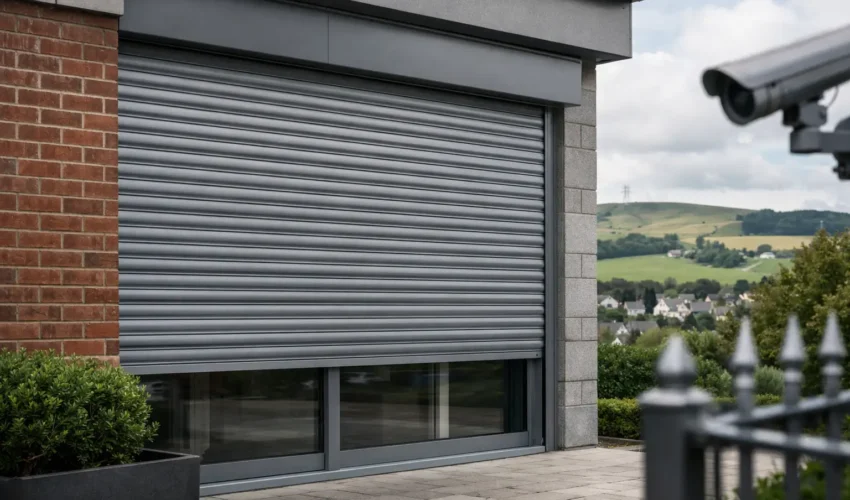
A smashed shopfront at 6am does more than create a repair bill. It delays opening, puts stock at risk, unsettles staff, and leaves you dealing with insurers, contractors and lost trading time before the day has properly started. That is exactly why security shutters are essential for retail businesses in Lanarkshire – they protect far more than the glass at the front of your premises.
For retailers, security is never just about stopping a break-in. It is about keeping the business trading, protecting staff, limiting disruption and making sure one incident does not turn into days of lost revenue. In towns across Lanarkshire, from busy high streets to retail parks and mixed-use commercial areas, shutters remain one of the most practical and effective ways to secure a premises outside trading hours.
Why security shutters are essential for retail businesses in Lanarkshire
Retail premises face a very specific set of risks. Unlike warehouses or offices, shopfronts are designed to be visible and accessible. Large glazed areas help display stock and welcome customers, but they also create a vulnerable entry point when the premises are closed. A standard lock and alarm may help, but they do not provide the same physical deterrent as a properly specified shutter.
The first benefit is straightforward – shutters make forced entry significantly more difficult. Opportunist crime usually relies on speed, ease and low visibility. If access takes longer, creates more noise and requires more effort, many intruders will move on. That visible deterrent matters. In many cases, the presence of a shutter changes the decision before any damage is even attempted.
The second benefit is reducing the scale of damage when an incident does happen. A smashed pane of glass can expose the entire frontage, allowing stock theft, vandalism and internal damage in minutes. A security shutter creates a barrier that separates the external attack from the trading space behind it. That can be the difference between a minor repair and a full closure.
Security is only one part of the picture
Retailers often think about shutters purely as an anti-theft measure, but the operational value is just as important. If your premises cannot open on time because the frontage has been damaged overnight, you lose sales immediately. If the opening is left unsafe, you may also face liability issues for staff and customers.
For businesses with early deliveries, valuable till equipment, display stock or branded shopfronts, the risks increase further. The more exposed the premises, the more sense it makes to put a physical barrier in place. Security shutters help maintain control over access, especially where the front elevation faces public footfall after hours.
This is particularly relevant in Lanarkshire, where many retail units sit within mixed commercial environments. A parade of shops, a town centre unit, or a roadside premises each has a different risk profile. What works for a small boutique may not suit a convenience store, pharmacy or trade counter. The point is not that every retailer needs the same shutter. It is that most retailers need some level of physical protection tailored to the building and the way the business operates.
The cost question retailers always ask
Most business owners eventually ask the same thing – is the cost of a shutter justified? In practice, that depends on what you are comparing it against.
If you compare the cost of installation with doing nothing, a shutter can seem like an extra overhead. But that is rarely the real comparison. The more realistic comparison is against the cost of one break-in, one failed trading day, one emergency glazing job, one insurance excess, or one period of staff disruption. When viewed that way, shutters are often the more cost-effective option over time.
There is also the question of asset protection. Retailers carry stock, point-of-sale equipment, signage, counters and fittings that all have value. Even where thieves do not gain full access, attempted forced entry can cause expensive cosmetic and structural damage. A well-fitted shutter helps reduce that exposure.
That said, not every premises needs the heaviest-duty solution available. There is a balance to strike between security level, aesthetics, ease of operation and budget. Some retailers want solid shutters for maximum privacy and resistance. Others prefer perforated or punched options that maintain some visibility while still providing protection. The right choice depends on stock value, frontage design, local risk and how the shop presents itself when closed.
Shutters support safer opening and closing routines
One of the less discussed reasons why security shutters are essential for retail businesses in Lanarkshire is staff safety. Opening up and locking up can be the most vulnerable points in the day, particularly during darker winter mornings and evenings.
A shutter gives staff a controlled sequence for securing the premises. It helps reduce exposure during cashing up, stock handling and end-of-day close-down. For shops with a small team, or with lone staff responsible for opening and closing, that added layer of protection can make a real difference.
This matters even more for businesses where stock is easy to remove and easy to resell, such as electronics, convenience goods, tools, tobacco products or branded fashion items. The easier it is for goods to leave the shop quickly, the more valuable a delay and deterrent system becomes.
Reliability matters as much as installation
A security shutter is only useful if it works properly when you need it. That sounds obvious, but many issues arise not from the original installation, but from lack of servicing, accidental damage or wear over time. A shutter that sticks, jams, slows down or fails to close fully creates a different type of problem – the business has paid for security but cannot rely on it.
This is where planned maintenance becomes part of the conversation. For retail operators, downtime is not just inconvenient. It affects opening hours, staffing and customer confidence. A fault with a front shutter can leave a unit insecure or inaccessible with very little notice.
That is why retailers tend to value fast repair response and practical engineering support, not just supply and fitting. A local specialist with experience in commercial shutters can assess the site properly, recommend the right system and keep it operational over the long term. For businesses in Lanarkshire, that local responsiveness often matters just as much as the product itself.
Appearance still matters on the high street
Some retailers hesitate because they worry shutters will make the premises look unwelcoming. That concern is fair, especially for customer-facing brands that rely on appearance and kerb appeal. But modern security shutters are not a one-size-fits-all product. The specification can be matched to the building, the frontage and the level of visibility required.
For some shops, a solid shutter is the right answer because privacy and maximum protection are the priority. For others, a grille or perforated finish can offer a more open appearance while still improving security. The right approach depends on what you want the premises to do after hours – disappear completely, or continue displaying a carefully managed frontage.
There is a trade-off here. More openness can support branding and visibility, but heavier and more enclosed systems may provide a higher level of resistance. A proper site survey helps make that decision based on risk rather than guesswork.
Insurance, compliance and peace of mind
Insurers will not always insist on shutters, but for many retail premises they strengthen the overall security position of the building. They show that the business has taken reasonable physical measures to protect stock and access points. That can be useful when reviewing risk, especially for premises with valuable goods or repeated exposure after hours.
There is also the wider issue of business continuity. Retailers are under enough pressure without dealing with avoidable closures caused by preventable damage. Physical security cannot remove every risk, but it can reduce the chances of a single overnight incident becoming a major operational problem the next morning.
For landlords and property managers, shutters also help protect the condition of the unit itself. Vacant retail premises, short-term tenancies and recently refurbished shopfronts are all vulnerable in different ways. Installing the right security measure early is usually cheaper than dealing with repeated reactive repairs later.
Choosing the right partner matters
Security shutters are not just a product purchase. They are part of how your premises functions day to day. That means specification, installation quality, servicing and repair response all matter.
A poorly matched shutter can be awkward to use, visually unsuitable, or more prone to faults. A better approach is to work with engineers who understand commercial property, assess the site properly and recommend what fits the opening, the risk level and the working routine of the business. For retailers, practical advice is worth more than a generic quote.
Door Systems Scotland works with businesses that need exactly that kind of dependable support – from initial survey through installation, repairs and ongoing maintenance. For a retail business, that joined-up service can make all the difference when security and uptime are both on the line.
A shutter should not be something you only think about after an incident. If your shopfront is one of the easiest access points on the street once the lights go off, it is worth addressing before it becomes an emergency.