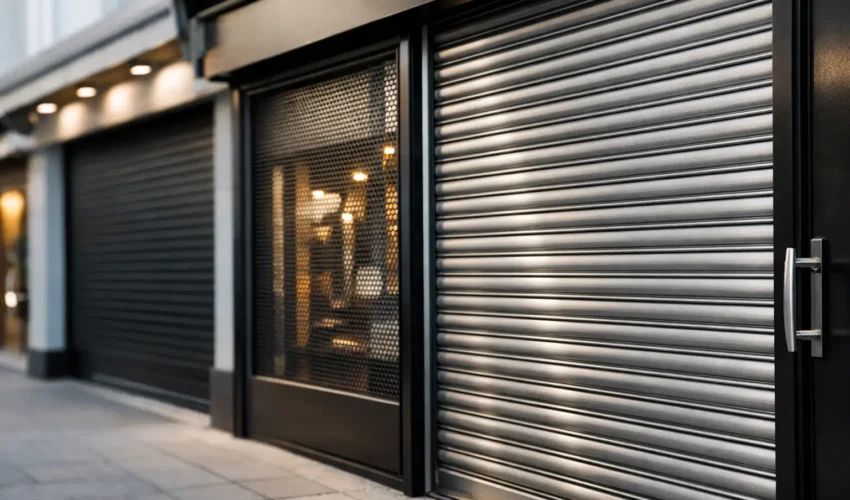
A damaged shopfront shutter at 7am can mean more than a repair bill. It can delay opening, leave stock exposed and create a poor first impression before the day has even started. Choosing the best shop security shutter options is not just about stopping break-ins. It is about protecting trading hours, keeping access reliable and making sure the shutter suits the way your premises actually operates.
For some retailers, a basic manual shutter is enough. For others, especially where daily use is heavy or the frontage is part of the customer experience, that choice can quickly become a false economy. The right solution depends on your frontage, risk level, opening frequency, insurance requirements and whether appearance matters as much as physical security.
What makes one shutter better than another?
The best option is rarely the one with the thickest slats or the lowest price. A good security shutter needs to match the real demands of the site. A small independent shop on a quieter high street has different priorities from a pharmacy, convenience store or premises with expensive display stock near the glass.
Material matters, but so do operation, visibility and service support. Aluminium shutters are often chosen where appearance and lighter-duty use are important. Steel shutters are typically preferred for stronger physical protection and more demanding environments. If the shutter is being opened and closed several times a day, the motor, controls and maintenance arrangement become just as important as the curtain itself.
That is where a proper site survey earns its place. Measurements, headroom, side room, power supply, pedestrian access and the condition of the opening all affect what can be fitted safely and reliably.
Best shop security shutter options for different premises
Solid steel roller shutters
For straightforward physical protection, solid steel roller shutters remain one of the most popular choices. They provide a strong visual deterrent and a durable barrier against forced entry. This makes them well suited to off-licences, convenience shops, stock-heavy retail units and premises in locations where vandalism or repeated attempted break-ins are a concern.
The trade-off is visibility. When the shutter is down, the frontage is fully closed off. That can be exactly what some owners want after hours, but it does mean your display disappears completely. Solid shutters can also look more industrial, which may not suit every retail setting.
Where security is the top priority, though, steel is hard to ignore. It generally offers excellent durability and can cope well with frequent use when properly specified and maintained.
Perforated or punched roller shutters
If you want a balance between security and visibility, perforated shutters are often the better fit. These allow some light and sight through the curtain while still giving the frontage meaningful protection. They are a common choice for shops that want passers-by to see stock outside trading hours without leaving the glazing fully exposed.
This option works well in shopping parades and centres where appearance matters and where full blackout security can feel too harsh. You still get a secure shutter, but with a more open look.
It is worth being realistic, though. Perforated shutters do not offer exactly the same visual concealment as a solid curtain. If your concern is hiding high-value goods completely from view, a solid design may still be preferable.
Brick bond and grille shutters
For retailers who want after-hours visibility as part of the sales strategy, brick bond grilles and open pattern shutters can make sense. Jewellers, mobile phone shops and certain branded retail units often choose these where internal display lighting is important.
These shutters provide a physical barrier while keeping the shopfront visible. In the right setting, they can help the premises look secure without appearing shut down.
The decision here depends heavily on risk profile. A grille shutter can be an excellent choice in managed retail environments or lower-risk areas, but may not be the best answer where there is a history of aggressive attack on shopfronts. It is a case of matching the shutter to the threat level rather than choosing on looks alone.
Aluminium security shutters
Aluminium shutters are often selected where lower weight, cleaner appearance and quieter operation are priorities. They can suit salons, smaller retail units, kiosks and internal shopfronts within larger commercial buildings.
Because aluminium is lighter, it can be a practical solution for openings where usage is regular and a heavy steel curtain may be unnecessary. In some cases, the reduced weight also places less strain on components over time.
That said, aluminium is not automatically the best option for every external frontage. For higher-risk premises or larger openings, steel may still provide the stronger long-term answer. The best choice comes down to exposure, opening size and expected usage.
Manual or electric operation?
This is one of the most overlooked parts of choosing the best shop security shutter options. Many owners focus on the curtain type and leave operation until later, but daily usability has a direct impact on reliability.
Manual shutters can be suitable for smaller openings with limited use. They avoid motor costs and can be perfectly serviceable in the right setting. The problem comes when the shutter is large, heavy or used several times each day. In those cases, manual operation can become awkward, time-consuming and harder on the mechanism.
Electric shutters are usually the better choice for busy premises. They improve convenience, reduce effort and help staff open and secure the building quickly. They can also be integrated with key switches, fobs or other access controls depending on the site.
As with any powered system, maintenance matters. A motorised shutter that is not serviced properly can become a different kind of risk if it fails during trading hours or refuses to close at the end of the day.
Fire safety, compliance and practical access
A security shutter should never create operational problems elsewhere. Emergency escape routes, fire exits and staff access all need to be considered before installation. This is especially important on mixed-use sites, healthcare premises and shops with rear delivery arrangements.
There is also the question of safe use. If staff are operating the shutter every morning and evening, controls need to be sensible and dependable. A shutter that sticks, drops unevenly or shows signs of wear is not just inconvenient – it can become a safety issue.
For that reason, installation quality and planned servicing are part of the buying decision. A cheaper shutter with poor support behind it may cost more over time than a properly specified system from the start.
How to choose the best shop security shutter options for your site
Start with the obvious question – what are you trying to protect against? Opportunist theft, repeated vandalism, forced entry, or simply after-hours exposure all point towards slightly different solutions.
Then consider how the premises works day to day. If you open early, close late or rely on quick access for staff and deliveries, ease of operation matters. If your frontage is part of your marketing, visibility matters too. If insurance conditions are strict, the specification may need to meet a particular standard.
A good supplier will not simply ask for opening sizes and send a price. They should ask how often the shutter will be used, what level of security is required, whether there have been previous incidents and how important the shopfront appearance is. In practical terms, that conversation often saves money by avoiding the wrong fit.
In Scotland, where weather exposure is part of the equation, finish quality, corrosion resistance and reliable engineering support also deserve attention. A shutter that looks fine on paper but struggles with local conditions or infrequent servicing can quickly become a problem.
Installation is only half the job
Even the best shutter will need attention over time. Wear in the guides, motor issues, damaged slats and impact from stock handling or external contact can all affect performance. When a shop shutter fails, the disruption is immediate. You may not be able to open, or you may not be able to secure the premises properly at close.
That is why many commercial operators look beyond installation cost and ask what happens when something goes wrong. Fast repair response, access to parts and planned maintenance are not extras. They are part of keeping the entrance working and the business trading.
For many shop owners and facilities teams, this is where an engineer-led approach makes the most difference. A proper survey, correct specification and dependable follow-up support will usually deliver better value than simply choosing the lowest quote. Door Systems Scotland works with businesses that need exactly that – practical advice, reliable installation and responsive repair support when access or security becomes urgent.
The right shutter should feel like part of the building, not a daily battle with the building. If you choose with the site, the risk and the routine in mind, you are far more likely to end up with a system that protects the premises without getting in the way of running it.