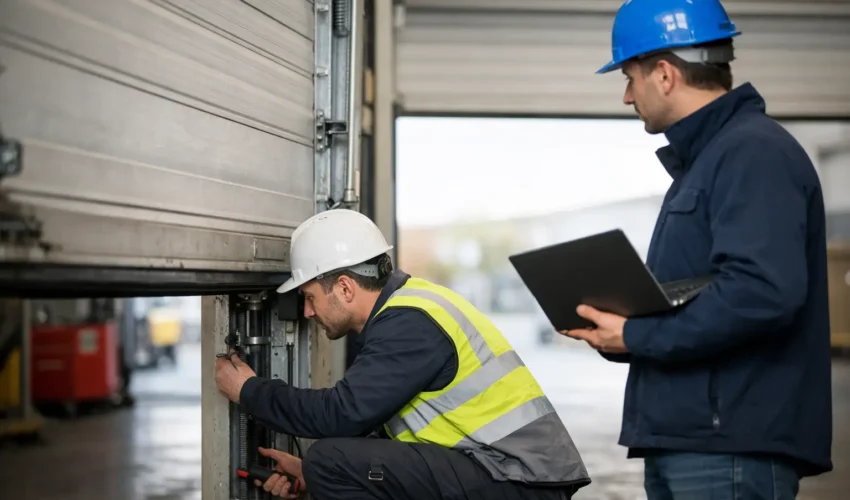
When an industrial door starts sticking at 6.30 on a busy morning, the problem is rarely just the door. Deliveries back up, staff lose access, heat escapes, security is compromised, and someone ends up trying to force a fix before the first lorry arrives. That is why understanding common industrial door problems and when to call an engineer matters for any site responsible for safety, access and trading continuity.
Some faults are minor and can be spotted early. Others point to wear in critical components that should never be handled as a quick DIY job. The difference matters, especially on roller shutters, sectional overhead doors, high-speed doors, automatic entrances and loading bay equipment where a small mechanical or electrical issue can quickly become operational downtime.
Common industrial door problems and when to call an engineer
Most industrial doors do not fail without warning. In many cases, the early signs are there for days or weeks. A door may sound rougher than usual, hesitate during travel, or need repeated button presses before it responds. These are not just irritations. They often signal strain elsewhere in the system.
A door that becomes slow to open or close is one of the most common callout issues. Sometimes the cause is straightforward, such as dirt in the tracks, a blocked sensor, or a minor settings issue. Just as often, it points to motor wear, control faults, spring imbalance, or drag caused by damaged guides. If the door is still operating but clearly not running as it should, that is the right time to book an engineer rather than wait for a complete failure.
Misalignment is another frequent problem. Roller shutter doors can shift in their guides, sectional doors can run unevenly, and high-speed doors can suffer repeated curtain edge wear if tracking is off. A door that looks skewed, catches on one side, or leaves an uneven gap when closed should be inspected properly. Continued use can damage the curtain, tracks, motor and safety devices at the same time, which usually means a more expensive repair later.
Electrical faults are also common, particularly on heavily used doors. Intermittent controls, dead key switches, failed safety edges, unresponsive photocells or faults on the control panel may all stop the door from operating correctly. Sometimes the issue is visible. More often it is not. Once electrical components are involved, especially on automatic or powered doors, it makes sense to call a qualified engineer instead of relying on guesswork.
Problems that look small but are not
There are a few faults that businesses tend to underestimate.
One is unusual noise. Grinding, squealing, rattling or banging sounds usually mean something is loose, worn or out of line. On a manual shutter, that could be a problem with the barrel, end locks or guides. On a powered system, it could indicate bearing wear, chain issues, gearbox strain or motor problems. Doors should not suddenly become noisy without a reason.
Another is impact damage. A forklift clipping the bottom rail or a vehicle catching a door leaf may not stop operation straight away, but it can distort key parts of the system. The temptation is often to keep using the door because it still opens and closes. That can be risky. Bent tracks, damaged curtains and compromised safety devices can all worsen under load.
Weather exposure is another factor across Scotland, especially on external shutters, loading bay doors and frequently used warehouse entrances. Wind, moisture and temperature changes can affect seals, sensors, steel components and moving parts. A door that starts jamming after bad weather may need more than lubrication. Water ingress into controls or corrosion around fixings can create a wider reliability problem.
When you can carry out a basic check
Not every issue requires an emergency visit. Site teams can often carry out a simple visual check before lifting the phone, provided nobody attempts to dismantle, force or bypass the system.
Check whether there is obvious debris in the tracks, whether a sensor is blocked, whether the power supply has been interrupted, or whether the emergency stop has been activated. On automatic doors, a dirty sensor or activation zone issue may explain erratic behaviour. On shutters, a visible obstruction at the bottom of the guide can occasionally be the cause.
That said, the limit is important. If the door is heavy, powered, fire-rated, automated, jammed in place, or behaving unpredictably, the safest next step is an engineer visit. There is a big difference between identifying a likely issue and trying to repair a high-tension or electrically controlled door system on site.
When to call an engineer straight away
Some situations should never be left until the next convenient service slot.
If the door has dropped suddenly, is hanging unevenly, has come out of its guides, or will not stay in position, stop using it immediately. The same applies if the bottom edge is damaged after impact, the motor is overheating, smoke or burning smells are present, or safety features are not stopping the door correctly.
Call an engineer straight away if the fault affects security or safe access. A shutter stuck open leaves stock and premises exposed. A door stuck shut can stop deliveries, block fire exits, or prevent customer and staff movement. On medical, retail and logistics sites, even a short period of downtime can have knock-on effects far beyond the entrance itself.
Repeated resetting is another red flag. If a door only works after multiple resets or manual intervention, the root cause is still there. Temporary recovery does not mean the system is safe or reliable. It often means the fault is developing.
Different door types fail in different ways
The detail depends on the type of door you have.
Industrial roller shutters often develop problems with motors, barrels, lath damage, guide alignment and bottom rail wear. If operation becomes jerky or the curtain looks uneven, further use can overstress the motor.
Sectional overhead doors tend to show issues through cable wear, spring fatigue, roller damage and track problems. These systems carry significant tension, so adjustment should be left to trained engineers.
High-speed doors usually highlight faults quickly because they are used so often. Sensor issues, curtain damage, control errors and repeated collision impact are common. Fast doors are designed to reduce heat loss and improve traffic flow, but only if they are correctly set up and maintained.
Automatic sliding and swing doors present a different set of concerns. If they are opening unexpectedly, failing to detect users properly, or closing too quickly, there may be a safety issue as well as a functional one. Public-facing entrances need prompt attention because faults can affect accessibility and compliance, not just convenience.
Why planned maintenance changes the picture
Many emergency repairs start as maintenance issues that were easy to miss in day-to-day operations. A door is used constantly, so gradual decline can feel normal until the day it fails completely.
Routine servicing helps identify wear before it becomes disruption. Engineers can spot fraying cables, worn rollers, loose fixings, sensor drift, motor strain and control issues while the door is still serviceable. That gives businesses more choice. You can plan a repair at the right time rather than respond under pressure when access has already been lost.
For facilities managers and business owners, this is usually the real cost question. A planned repair is rarely just about the part itself. It helps avoid failed deliveries, lost trading time, security exposure and disruption to staff and visitors. In many cases, a maintenance contract works out more cost-effectively than repeated reactive callouts.
What to expect when you report a fault
A good repair process should start with the right questions. What type of door is it, what is it doing, when did the issue start, and is the site secure and accessible right now? Clear fault reporting helps an engineer arrive with the right expectation and, often, the right parts.
Photos or a short video can also help if it is safe to take them. That is especially useful for visible curtain damage, track impact, control panel faults or alignment issues. On urgent jobs across Lanarkshire and Glasgow, fast diagnosis matters because every hour of downtime affects the wider site.
For local businesses using specialist support such as Door Systems Scotland, the value is not just the repair itself. It is having an engineer-led response from people who understand commercial door systems, local operating pressures and the need to get access restored properly.
If your door has changed its speed, sound, movement or reliability, treat that as useful warning rather than background noise. The earlier you act, the more likely it is to stay a repair job instead of becoming a shutdown.