If you are searching for high speed doors near me, there is usually a reason it has become urgent. A warehouse opening is slowing traffic, a chilled area is losing temperature, or a damaged door is starting to affect security and shift timings. In most commercial settings, a door problem is not just a door problem. It affects output, safety, energy use and the day-to-day flow of people, pallets and vehicles.
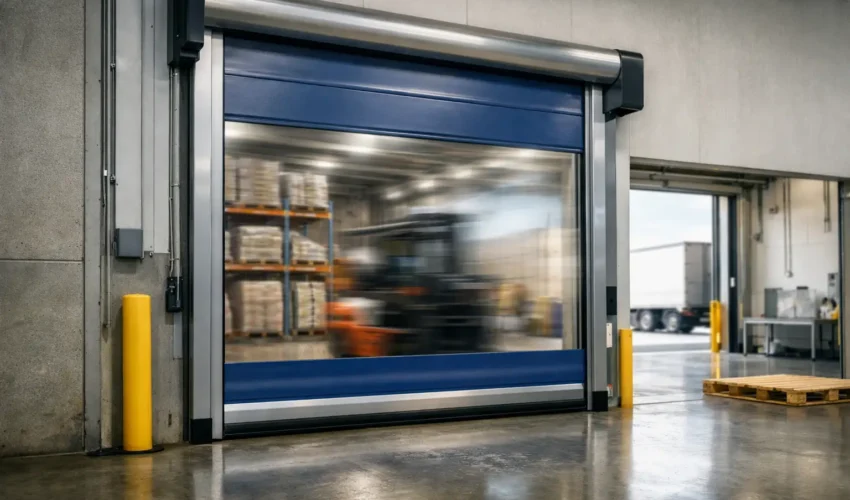
High speed doors are built for places where standard shutters or slower industrial doors create friction in the working day. They open and close quickly, reduce time lost at access points and help separate environments more effectively. That matters in logistics, food handling, manufacturing, retail service yards and medical settings where reliability is not optional.
Why businesses search for high speed doors near me
The word “near me” matters more than it might seem. With industrial and commercial doors, the product is only part of the answer. What usually matters just as much is survey quality, installation standards, response time and whether there is local engineering support available when something goes wrong.
A high speed door has moving parts, safety features, control systems and curtain materials that need to suit the site. If the opening is exposed to wind, heavy traffic or repeated use through the day, the wrong specification will show up quickly in avoidable faults and downtime. That is why many buyers prefer a specialist that can inspect the opening properly, talk through usage levels and stay available for maintenance and repairs after installation.
For sites across Lanarkshire, Glasgow and the wider central belt, local support can make a practical difference. A fast response is useful when a door fails shut and blocks dispatch, but it is just as valuable before that point, when regular servicing can keep the system reliable and avoid disruption.
What a high speed door actually does well
The main benefit is speed, but that speed has knock-on effects that often justify the investment. A door that opens and closes quickly limits heat loss, helps with environmental control and keeps traffic moving. In some premises it also reduces contamination risk by limiting the time an opening stays exposed.
For busy operations, that can have a measurable effect. Forklift routes become more efficient. Staff are not waiting around for access. Temperature-sensitive areas are easier to manage. Noise, draughts and dust can be reduced depending on the layout of the building.
That said, not every site needs the fastest possible door. A lower-cycle opening with limited use may be better served by another type of industrial door if budget is the main concern. The right choice depends on traffic volume, internal conditions, security demands and how critical uptime is to the business.
Choosing the right high speed door near me
A good local survey should start with the opening itself, but it should not end there. The real question is how the door will be used over time.
Traffic and operating frequency
If the opening serves a main warehouse route, a loading area or a production line, cycle count matters. Some doors are designed for frequent daily use and recover better from repeated opening and closing. Others suit lighter-duty applications. Under-specifying here often leads to avoidable wear and more callouts.
Internal, external and specialist environments
An internal door separating warehouse zones has different demands from an external door exposed to weather. In chilled or clean environments, speed and sealing performance become more significant. In retail or customer-facing settings, appearance and safe pedestrian use may carry more weight.
Safety features and controls
Photocells, safety edges, induction loops, radar activation and access controls all need to be considered around actual site movement. A busy mixed-use opening with pedestrians and FLTs needs a different setup from a staff-only route. The best arrangement is usually the one that keeps the door working with minimal manual intervention while still maintaining safe operation.
Maintenance access and future repairs
This gets overlooked during purchasing. Some door systems are easier to service than others, and local parts support matters. When a door is central to operations, you want a practical route to repairs rather than a long wait for diagnosis, parts or manufacturer advice.
When a cheaper option can cost more
It is understandable to compare prices, especially across multiple openings or larger premises. But industrial doors tend to show their true cost after installation, not just on the quote.
A low-cost door that struggles with heavy usage, does not suit the environment or lacks reliable aftercare can create recurring repair costs and operational delays. If dispatch is interrupted, if a cold store loses temperature, or if staff have to reroute around a failed opening, the real cost moves far beyond the original supply price.
This is where engineer-led advice matters. A proper specification may cost more upfront, but if it cuts downtime and lasts better under site conditions, it is usually the more economical decision over the life of the door.
Installation matters as much as the product
Even a well-made high speed door can underperform if the installation is rushed or poorly aligned. Openings are rarely identical, especially on older industrial buildings where floors, steelwork and clearance can all vary.
A competent installer should assess fixing points, headroom, side room, power supply and activation requirements before work begins. They should also consider how installation can be staged to limit disruption, particularly where access needs to be maintained for trading or goods movement.
For many businesses, the best experience is not simply getting the door fitted. It is having one contractor who can survey, install, commission and then support the system afterwards. That continuity usually means fewer misunderstandings and a quicker route to action if anything needs adjusted.
Repairs and servicing are part of the decision
If your search for high speed doors near me is driven by a current fault, it is worth looking beyond the immediate repair. A door that is repeatedly failing may be the wrong type for the opening, poorly maintained or simply at the end of its service life.
In some cases, a repair is the sensible route. In others, replacing an unreliable system avoids repeated disruption. The right answer depends on age, parts availability, fault history and how critical the opening is.
Planned maintenance is what keeps that decision from becoming urgent too often. Regular servicing allows engineers to inspect wear points, test safety systems, adjust settings and spot problems before they become full failures. For high-use sites, that can make a real difference to uptime and budgeting.
Door Systems Scotland works with businesses that need that kind of practical support – from initial surveys and installations through to reactive repairs and ongoing maintenance.
What to expect from a local specialist
A reliable contractor should be able to explain what suits your opening without overcomplicating it. That includes being clear about the strengths and limits of each option.
For example, a fabric roll-up high speed door may be ideal for internal speed and environmental separation, but another solution may be better where impact resistance, external exposure or security are bigger concerns. The point is not to force one product everywhere. It is to match the system to the site.
You should also expect a clear route to support after the job is complete. If a door becomes critical to your operation, response time and accountability matter. Local firms with engineer-led surveys and regional coverage are often better placed to provide that than companies selling nationally without strong service backup on the ground.
Questions worth asking before you commit
Before choosing a supplier, ask how often the door is expected to cycle, what maintenance will be required and how quickly repairs can be attended if the door goes down. Ask which safety devices are included, whether the model is suitable for your environment and whether spare parts are readily available.
It is also sensible to ask who will carry out the survey and whether the same business will handle installation and aftercare. A lot of future problems are avoided when the people specifying the door understand how the site actually works.
Finding the right fit for your site
The best high speed door is not necessarily the fastest one or the cheapest one. It is the one that suits the opening, stands up to daily use and comes with dependable support when you need it.
If your site depends on smooth access, controlled environments or quick vehicle movement, taking time to get that choice right pays off. A proper survey, a sensible specification and local engineering backup will usually do more for your operation than a headline price ever will. And when a door is part of keeping the business moving, that is usually the detail that matters most.