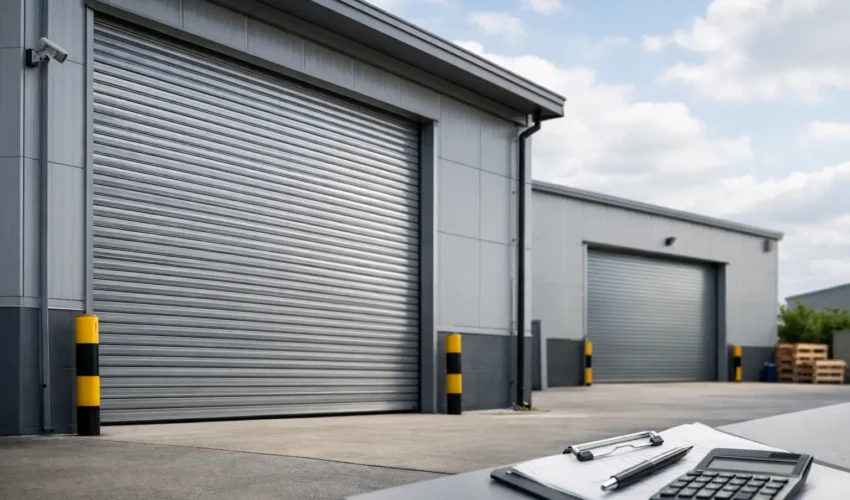
If you are pricing a new shutter for a warehouse, workshop or trade counter, the first thing to know is this – industrial roller shutter doors prices UK can vary far more than many buyers expect. Two doors that look similar on paper can end up hundreds or even thousands of pounds apart once size, usage, controls, safety features and installation conditions are factored in. That is why a quick online figure is rarely the full story.
For most commercial sites, the better question is not simply what does a roller shutter door cost, but what are you paying for and what will that door need to do every day. A shutter on a small storage unit has a very different job from one on a busy loading bay with constant vehicle movements, strict security requirements and pressure to keep downtime to a minimum.
What affects industrial roller shutter doors prices UK
The biggest cost driver is usually size. Wider and taller openings need more material, a stronger barrel assembly and often a more capable motor. A standard shutter for a modest industrial unit will naturally sit at a different price point from an oversized door on a distribution building or production facility.
Material and build quality also matter. Galvanised steel is common because it offers good strength and durability for everyday industrial use. Aluminium can suit some applications where weight and finish are priorities, but the right choice depends on traffic levels, security needs and the environment around the door. If the premises are exposed to heavy weather or corrosive conditions, specification becomes more important than choosing the lowest quote.
Then there is the operating method. A basic manual shutter may be suitable for low-frequency use on smaller openings, but many industrial customers will need electric operation as standard. Once you add motors, control panels, remote access, key switches, safety edges, photocells and emergency override systems, the price rises accordingly. In many cases, that extra cost is justified because it improves efficiency and reduces strain on staff.
Usage frequency is another detail that often gets missed. If a door opens a handful of times a day, the spec can be very different from a shutter cycling repeatedly through a working shift. Specifying too lightly can save money at the start but lead to breakdowns, lost time and avoidable repair costs later.
Typical price ranges for industrial roller shutter doors
As a broad guide, smaller manual industrial shutters may start from the lower end of the market, while electrically operated industrial roller shutters for commercial premises often sit in a higher bracket once supply and fitting are included. For many UK businesses, a straightforward electrically operated door might land somewhere from around £1,500 to £4,000 or more, while larger, heavier-duty or more specialised systems can move well beyond that.
That said, broad averages only go so far. A straightforward installation onto a clear, accessible opening is one thing. A replacement on an older building with restricted headroom, poor existing supports or electrical upgrade requirements is another. The survey matters because it shows whether the opening is genuinely ready for the door you want.
Insulated shutters tend to cost more than single-skin alternatives, but they can be the better fit where heat retention, noise reduction or internal comfort are part of the brief. For sites that need better thermal performance, a cheaper non-insulated option may not be a saving in the long run.
Why installation costs can change the quote
When buyers compare prices, they often focus on the shutter itself and overlook the labour and site work involved. Installation cost depends on access, lifting requirements, the condition of the structure and whether old equipment has to be removed first. If engineers need additional steelwork, electrical works or out-of-hours installation to avoid disrupting operations, the quote will reflect that.
This is especially relevant on active commercial sites. A retail unit, medical premises or warehouse may need work planned around trading hours, deliveries or staff safety procedures. In those cases, a proper site survey is not an added extra. It is what prevents delays, surprise costs and the wrong specification.
For that reason, engineer-led quotations are usually more useful than generic online estimates. They allow practical issues to be picked up early, from lintel condition to power supply and clearances. That tends to produce a more accurate number and a smoother installation.
Cheaper is not always better
There is always pressure to control capital spend, especially across multiple properties. But the cheapest industrial shutter quote is not always the most economical decision. Lower-cost doors may use lighter components, less suitable motors or a specification that is simply not built for the pace of your site.
A door that fails regularly can become expensive very quickly. If a warehouse shutter sticks half open, security is compromised. If a trade counter cannot receive stock, staff time is lost. If a shopfront shutter will not operate at opening time, trading is affected straight away. In practical terms, the real cost includes disruption, emergency callouts and the damage done when access fails at the wrong moment.
That is why experienced contractors tend to talk about suitability, not just purchase price. A well-specified door should match the opening, the volume of use and the risk around the premises. Paying a bit more up front can often reduce reactive maintenance costs later.
Industrial roller shutter doors prices UK and ongoing costs
The purchase price is only part of the budget. Servicing, repairs and compliance should also be considered from the outset. Like any mechanical access system, industrial shutters need routine maintenance to stay safe and dependable.
Planned servicing helps catch wear before it turns into a breakdown. It can also extend the life of motors, safety devices and curtain components. For busy commercial and industrial premises, this is usually the most cost-effective approach because it reduces unplanned downtime.
Repairs vary depending on the fault. Minor issues such as control problems or adjustments may be relatively straightforward. Damage to the curtain, motor failure or impact to the guides can be more involved. If the door is a key part of daily operation, response time matters just as much as the repair price.
That is one reason many buyers look beyond installation and choose a contractor who can also support the door long term. A local engineering team with repair and maintenance capability is often worth more than a one-off low installation quote from a supplier with limited aftercare.
How to budget properly for a new shutter
Start with the opening size, but do not stop there. Think about how often the door will operate, what level of security is needed, whether insulation matters and how much downtime the site can tolerate if something goes wrong. These points shape the specification and, in turn, the cost.
It also helps to be clear about the environment. A shutter on a busy service yard, food production site or customer-facing premises may need different controls, finishes or safety measures. If forklifts, pedestrians and delivery vehicles all share the same area, that should be reflected in the design.
Ask whether the quote includes supply, installation, removal of the existing door, electrical connection, commissioning and handover. If you compare one quote that includes everything with another that leaves key items out, the lower number may not be a fair comparison.
If you are responsible for a site in Lanarkshire, Glasgow or the surrounding area, a proper survey from a specialist such as Door Systems Scotland is usually the fastest route to an accurate figure. It gives you a price based on the actual opening and the demands of the premises, rather than a guess built around a standard door that may not suit the job.
What a sensible buyer should ask before accepting a quote
Before going ahead, ask what duty level the door is designed for and whether that matches your daily use. Check the warranty, the lead time and what support is available if the door fails unexpectedly. It is also worth asking what servicing is recommended and whether replacement parts are readily available.
A good quote should be clear about specification rather than vague on detail. You want to know what motor is being supplied, what safety features are included and whether the installer has allowed for the practical realities of the site. If those points are missing, the number on the page may not hold once work starts.
The most useful price is not the cheapest one. It is the one tied to the right door, fitted properly, with dependable support behind it. For any business that relies on secure access and smooth day-to-day operation, that is usually where the best value sits.
If you are budgeting for a new industrial shutter, treat the quote as an operational decision rather than a simple product purchase. The right door should protect the building, support the way your site works and give you fewer problems when the working day is already busy enough.