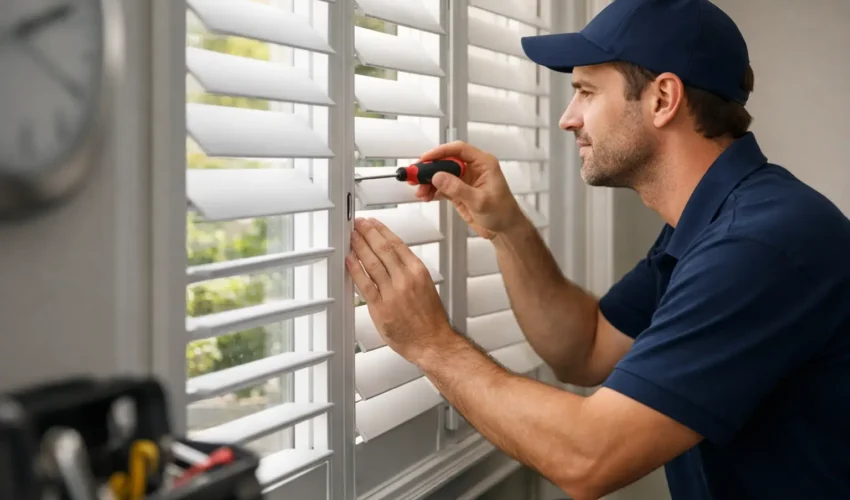
A shutter that still opens and closes is not necessarily a shutter in good condition. In commercial premises, that distinction matters. If you are asking when should shutters be serviced, the honest answer is usually before they start causing delays, safety concerns or security problems.
For many businesses, shutters are easy to ignore until they stick halfway, make a grinding noise, or fail on a busy trading day. By that point, what could have been a straightforward service visit can become an urgent repair callout, with disruption to deliveries, staff access or customer entry. Regular servicing is less about ticking a box and more about keeping the door reliable when your site needs it.
When should shutters be serviced in practice?
In most commercial and industrial settings, shutters should be serviced at least once a year. That is a sensible minimum for doors with moderate use and a relatively clean operating environment. If the shutter is used heavily, protects a busy entrance, or operates in a warehouse, workshop or exposed external location, servicing may be needed every six months.
That interval is not arbitrary. Roller shutter doors and security shutters rely on moving parts that wear gradually over time. Springs, guides, bearings, motors, safety edges and control systems all need checking. Small faults often build quietly in the background long before there is a complete failure.
A lightly used shutter on a small private unit may cope well with annual maintenance. A shutter on a retail frontage, service yard or loading area that cycles multiple times a day is under more strain. In those cases, a shorter service schedule is usually the safer and more cost-effective choice.
Why timing depends on usage, not just age
One of the most common assumptions is that newer shutters do not need much attention. In reality, service frequency is driven more by how the shutter is used than by how old it is. A two-year-old shutter used constantly may need more attention than a ten-year-old shutter on a quieter site.
Usage affects wear on mechanical components, but it also affects alignment, safety performance and motor reliability. Frequent opening and closing can loosen fixings, increase vibration and expose weak points in controls and limit settings. If a shutter is part of your daily operation, servicing should be planned around operational demand rather than left until there is a visible problem.
Environment also plays a part. Dust, moisture, wind exposure and temperature swings can all shorten component life. Premises near the coast, industrial yards, food production areas and loading bays often put more stress on door systems than office-based environments. The more demanding the conditions, the less sensible it is to rely on a once-in-a-blue-moon inspection.
Signs your shutter needs servicing sooner
Even with a planned maintenance schedule in place, some shutters will need attention earlier. The warning signs are usually easy to spot if someone is paying attention.
If the shutter becomes noisier than usual, slows down, hesitates during travel, drops unevenly or needs repeated attempts to operate, it should be inspected. The same applies if staff notice damaged slats, worn cables, stiff manual operation, unreliable remote controls or safety features that do not respond as expected.
Not every issue means major repair work is required. Sometimes the problem is adjustment, lubrication, a worn component or an electrical fault that can be dealt with quickly during a service visit. The risk comes from allowing those symptoms to continue. A shutter rarely fixes itself, and minor strain on one part often leads to bigger failures elsewhere.
Servicing is about safety as much as reliability
Business owners and facilities managers usually think first about downtime, and understandably so. If a shutter fails, deliveries stop, staff are delayed and premises may be left insecure. But servicing also matters for safety.
Powered shutters can present real hazards if they are not maintained properly. Faulty safety edges, misaligned guides, braking issues or problems with controls can put people and vehicles at risk. A shutter that closes unpredictably or struggles in operation is not simply inconvenient.
Routine servicing helps identify whether the system is operating safely, whether safety devices are functioning correctly and whether wear is reaching a point where parts should be replaced. That is one reason planned maintenance makes sense for busy commercial sites – it gives you a clearer picture of risk before there is an incident.
What a shutter service should include
A proper service is more than a quick visual check. It should involve inspection, testing and adjustment by an engineer who understands industrial and commercial door systems.
Typically, that means checking the curtain, guides, end locks, barrel assembly, motor, control panel, safety devices and fixings. Moving parts may need lubrication where appropriate, but servicing is not just about applying grease and moving on. Engineers should also be looking for signs of wear, poor alignment, damaged components and developing faults.
Electrical operation should be tested, along with emergency override functions where fitted. On powered systems, the door should be assessed not only for whether it works, but for how well it works. A shutter that technically operates while placing extra strain on the motor or travelling unevenly is already giving advance warning.
For sites with multiple shutters, consistency matters too. Planned servicing across the estate can help identify recurring issues, age-related replacement needs and patterns of misuse that might otherwise go unnoticed.
Planned maintenance versus reactive repairs
Some businesses still run on a reactive basis – if the shutter breaks, call someone. That approach can seem cheaper in the short term, especially where the door is not seen as mission-critical. In practice, it often costs more.
Reactive repairs usually happen at the worst possible time. A failed shutter can affect opening hours, stock movement, site security and health and safety arrangements. Emergency attendance is valuable when needed, but it should not be your only maintenance strategy.
Planned servicing gives you more control. Faults are picked up earlier, replacement parts can be scheduled more efficiently, and disruption is usually lower. It also helps budget planning. Instead of being hit with avoidable emergency costs, you have a clearer maintenance picture over the year.
There is still a place for rapid repair support, especially for shutters damaged by impact, vandalism or sudden electrical faults. But relying only on callouts tends to mean you are always dealing with the consequence, not the cause.
How often is too often?
There is no benefit in over-servicing a shutter for the sake of it. A low-use door in a clean, sheltered environment may not need frequent visits beyond an appropriate annual inspection. Good maintenance should be based on actual site conditions, not a generic sales pitch.
That said, under-servicing is far more common than over-servicing. The practical question is not whether you can stretch the interval a little longer, but what the cost is if the shutter fails before then. For a warehouse, trade counter, retail unit or healthcare premises, that cost can quickly outweigh the price of regular maintenance.
If you are uncertain, a site survey is usually the sensible starting point. An engineer can assess the type of shutter, how often it is used, the condition it is in and the level of risk attached to failure. From there, a realistic service schedule can be set rather than guessed.
When a service should lead to repair or replacement
Servicing does not always end with a clean bill of health. Sometimes it reveals that a shutter is reaching the point where repair is needed, or where replacement is the more sensible option.
If parts are heavily worn, repeated faults are occurring, or the shutter is no longer reliable despite previous repairs, continuing to patch it up may not represent good value. Older doors can become harder to support, especially if components are obsolete or the system has been modified over time.
A good maintenance contractor should be clear about that. Not every ageing shutter needs replacing immediately, but there should be honest advice on whether ongoing repairs are likely to hold up operationally. For many businesses, the best outcome is not the cheapest immediate fix, but the option that reduces repeat disruption.
In busy areas across Lanarkshire and Glasgow, where access, security and trading hours are tightly managed, that practical view matters. Door Systems Scotland works with businesses that cannot afford to wait for a full failure before acting, particularly where shutters protect stock, loading access or customer-facing entrances.
A sensible rule for most businesses
If you want a simple answer to when should shutters be serviced, start with once a year as a minimum and move to every six months where usage is high, conditions are harsh or failure would seriously disrupt the site. If the shutter is already noisy, erratic or visibly worn, do not wait for the next planned date.
The most reliable shutters are not the ones that never develop wear. They are the ones that are inspected before wear becomes a problem. A timely service visit is usually far easier to manage than an urgent repair on a day when the site needs the door most.