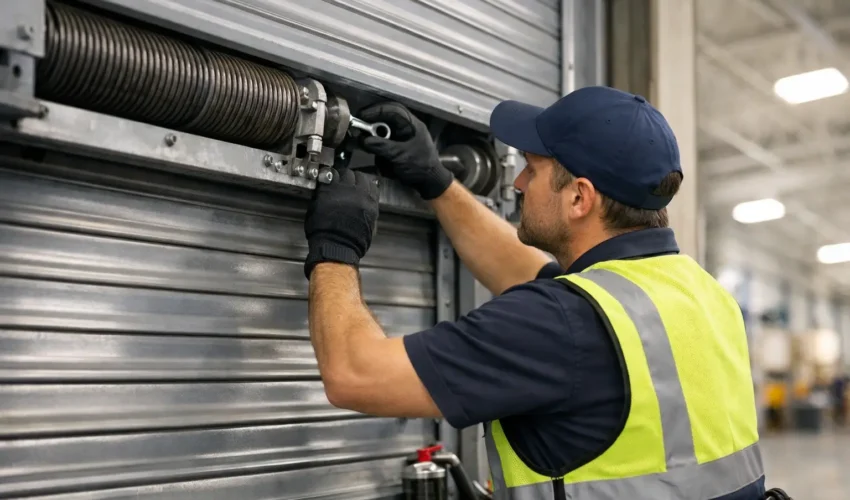
A loading-bay door that stops halfway open is more than an inconvenience. It can hold up deliveries, leave stock exposed, disrupt shifts and create a security risk after hours. This industrial door maintenance guide is designed for the people responsible for keeping commercial premises safe, accessible and operational – from warehouse and facilities managers to shopfront and property operators.
The aim is not to turn your team into door engineers. It is to help you spot early warning signs, carry out sensible day-to-day checks and know when a planned service or urgent repair is needed. A well-maintained door is usually quieter, safer and less likely to fail at the point your business needs it most.
Industrial door maintenance guide: where to start
Start by treating every industrial door as working equipment, not simply part of the building. Roller shutters, sectional doors, high-speed doors, automatic sliding doors and loading-bay systems all have moving parts, controls and safety devices that are subject to daily use, weather and accidental damage.
Maintenance should be based on the door type, how often it operates and what happens around it. A shutter opened twice daily at a small unit has different demands from a high-speed door running continuously in a busy distribution area. Likewise, a door exposed to wind-driven rain, salt air, forklifts or heavy pedestrian traffic will need closer attention.
Keep a simple record for each door. Note its location, type, make where known, service dates, reported faults and any repairs completed. This gives site managers a clear history to refer to and helps an engineer identify recurring problems before they become a larger failure.
Daily and weekly checks your site team can make
Your staff should only carry out visual and operational checks from a safe position. Do not remove covers, adjust springs, interfere with electrical controls or attempt to force a jammed door. Stored energy in springs, damaged cables and faulty electrics can cause serious injury.
At the start or end of a shift, look at the area around the opening. Pallets, bins, debris and ice can obstruct the door’s travel or prevent it from closing fully. For loading bays, check that vehicles, cages and forklift routes are not striking guides, bottom rails, safety edges or control posts.
Operate the door through a full open and close cycle where normal procedures allow. Listen for scraping, rattling, banging or a motor that sounds strained. A door should move smoothly without jerking, pausing unexpectedly or travelling unevenly. Any change in speed or noise is worth reporting, even if the door still works.
For automatic doors, keep sensor areas clear and watch how the door responds to people approaching. It should open and close predictably, without trapping risk or erratic movement. For roller shutters and sectional doors, check for bent slats or panels, damaged guides, loose-looking fixings, frayed cables and worn bottom seals.
A short defect report is more useful than a vague note saying the door is faulty. Record which door is affected, what it did, when it happened and whether there was a vehicle impact or power issue beforehand. That information helps a repair engineer attend prepared.
What planned servicing should cover
A planned maintenance visit goes further than a visual inspection. A competent industrial door engineer assesses the mechanical, electrical and safety-critical elements of the system, then identifies wear before it causes a breakdown.
The precise service scope depends on the door, but it commonly includes checking the curtain or panels, guides, rollers, hinges, bearings, drive unit, transmission components, control panel, cables, safety brakes and mounting points. Moving parts may need cleaning and lubrication with the correct product. Over-lubricating or using unsuitable oil can attract dirt and make a problem worse, so this should not be guesswork.
Safety systems need particular attention. Depending on the installation, these may include photocells, light curtains, pressure-sensitive safety edges, emergency stops, manual release mechanisms and safety brakes. An engineer will test that the door stops or reverses as intended and that controls are operating correctly.
Planned maintenance is also the right time to check alignment and limits. A door that is slightly out of line can wear its guides, motor and curtain faster than expected. Catching that early may mean an adjustment rather than an emergency callout, replacement parts and lost trading time.
How often should an industrial door be serviced?
There is no single interval that suits every premises. Usage is the key factor. Doors operating many times each day, doors protecting high-value stock, and doors forming part of a busy pedestrian or vehicle route usually need more frequent professional attention than lightly used doors.
As a practical starting point, arrange regular servicing at least annually for lower-use equipment, then increase the frequency where conditions demand it. High-use warehouse doors, automated entrances and critical loading-bay doors may benefit from inspections every six months or more often. Your engineer can recommend a schedule after assessing the equipment, site conditions and operational risk.
Do not wait for the annual service if the door has been struck, has started making unusual noise or is no longer closing securely. Impact damage can be less visible than it appears. A guide may be displaced, a safety edge compromised or an internal component put under strain.
Warning signs that need a repair callout
A door does not need to be completely inoperable before it needs professional attention. Acting early often protects the door, the people using it and your operating budget. Arrange an inspection promptly if you notice any of the following:
- The door sticks, drops, jerks or stops before reaching its normal position.
- It is noticeably noisier, slower or less responsive than usual.
- The curtain, panels, glazing, guides or bottom rail are bent, loose or damaged.
- Safety devices fail to respond, controls behave inconsistently or warning lights appear.
- The door cannot close and lock properly, leaving the premises insecure.
If a door has failed open, failed closed, suffered collision damage or is creating an immediate security or safety concern, isolate the area where possible and request an emergency repair. Do not allow staff to climb, force or prop a damaged door into position. The quickest-looking fix can increase the damage and delay a safe return to service.
Maintenance habits that reduce avoidable damage
Many industrial door faults are linked to how the opening is used. Clear procedures can make a genuine difference. Drivers should know the door must be fully open before a lorry, forklift or pallet load passes through. Staff should not pull on curtains, panels or safety edges to speed up operation, and controls should only be used by authorised people.
Housekeeping matters too. Keep tracks, guide channels and thresholds free from rubbish, loose wrapping, grit and standing water. In winter, inspect external openings for ice and ensure drainage around the doorway is working. Scotland’s weather can expose weaknesses in seals, fixings and external controls, particularly at sites facing persistent wind and rain.
If you have a power-operated door, make sure the manual release procedure is understood by the right people. This does not mean staff should use it to work around a fault. It means there is a controlled plan if access is needed during a power loss, with the door secured afterwards.
Choosing a maintenance partner
A maintenance agreement should give you more than a date in the diary. Look for an engineering company that understands the range of doors on your site, records defects clearly and can provide responsive repairs when an issue cannot wait. Ask what is included in the visit, how safety features are tested, whether repair recommendations are prioritised and what support is available outside normal hours.
Local response can be especially valuable when a failed shutter stops a warehouse dispatch or an automatic entrance affects customer access. Door Systems Scotland supports commercial and industrial sites with planned maintenance, repairs and emergency assistance, helping businesses across Glasgow, Lanarkshire and beyond keep critical entrances working as they should.
The best time to address a door problem is when it is still a small change in noise, movement or closing position. Build regular checks into site routines, keep accurate records and arrange professional servicing around how your premises actually operates. That approach gives you fewer surprises, safer access and a much better chance of keeping the day moving when pressure is on.