A shutter that jams at 6am, sticks halfway through a delivery, or fails to secure your building at close-up quickly stops being a simple purchase decision. For most commercial and industrial premises, the wrong shutter creates delays, safety concerns and repeat repair costs long before it needs replacing.
If you are working out how to choose industrial shutters, the best place to start is not the opening size or the price list. It is how the door will be used every day, who relies on it, and what happens to your operation when it fails. A warehouse, trade counter, retail unit and service yard may all need shutters, but they do not need the same specification.
How to choose industrial shutters for your site
The most reliable way to choose the right shutter is to match the system to the job. That sounds obvious, but many problems begin when a shutter is selected on upfront cost alone. A cheaper option can look fine on paper and still be a poor fit if it opens constantly, faces strong wind exposure, or protects high-value stock.
Start with traffic levels. A shutter used a few times a day for security after trading hours has very different demands from one opening repeatedly for forklifts, staff access or timed deliveries. High cycle use usually calls for a more durable setup, a suitable motor, and attention to downtime risk. If the opening is business-critical, speed of operation and ease of repair matter just as much as the initial supply cost.
You also need to look at the environment around the opening. Internal shutters, external shutters, loading bays and customer-facing entrances all bring different pressures. Moisture, wind, dust, temperature control and accidental impact all affect what will perform well over time.
Security, access and insulation all pull in different directions
One of the main trade-offs when deciding how to choose industrial shutters is that no single feature should dominate the whole specification. A very security-focused shutter may be heavier and slower. A fast-operating door may be ideal for workflow but less suitable as your primary security barrier. An insulated shutter may help with heat retention but add to cost and weight.
That is why the question should be, what matters most at this opening?
For a retail frontage, visible security and appearance may be the priority. For a warehouse, reliable access for vehicles and goods movement often comes first. For a food production or temperature-sensitive area, insulation and environmental control can be just as important as security. In healthcare or mixed-use commercial buildings, safe and controlled access may outweigh everything else.
When clients ask for the “best” shutter, the honest answer is usually that it depends on the balance between security, speed, durability and budget.
Think about what the shutter protects
A shutter securing expensive tools, stock or plant should not be treated the same as one closing off a low-risk internal area. Consider whether the opening is exposed to public access, hidden from view, vulnerable out of hours, or likely to be targeted because of the goods inside. The level of physical protection required should reflect the actual risk, not just the size of the opening.
Think about who uses it
If multiple members of staff operate the shutter, ease of use matters. Controls should be straightforward, safe and suitable for the working environment. If drivers, warehouse staff and managers all rely on the same system, poor operation or confusing controls can lead to unnecessary faults.
Choose the right shutter type for the application
Industrial roller shutters are a common choice because they are practical, space-efficient and suitable for many premises. Even then, there is no single version that suits every building.
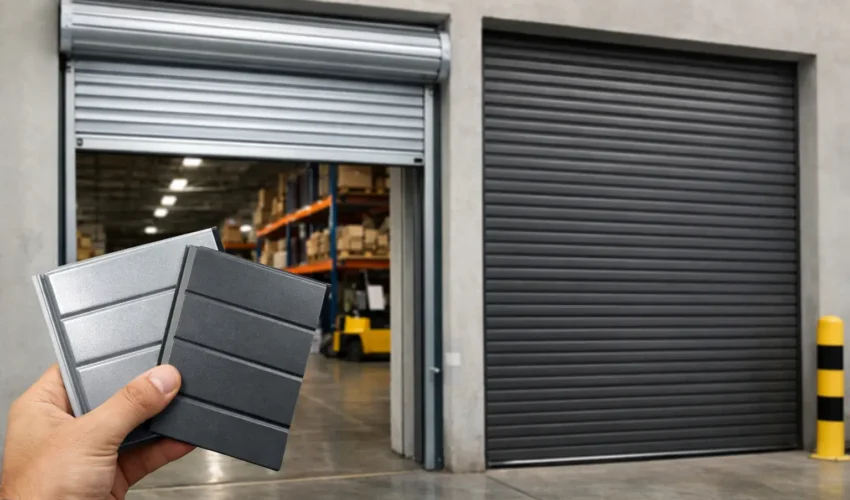
Steel shutters are often chosen for strength and security. They are well suited to external openings, service yards and units where protection is the main concern. Aluminium shutters can be a better fit where weight, finish or appearance are more important, particularly on shopfronts or commercial premises where the shutter is part of the visible frontage.
Insulated shutters are worth considering where heat loss affects comfort, energy use or product conditions. They can make a real difference on buildings with heated workspaces or frequent opening and closing, although they are not a substitute for addressing wider building fabric issues.
Perforated or punched shutters are sometimes used where visibility and ventilation are useful, such as retail settings. They offer a different balance of deterrence and display, but they will not provide the same solid barrier as a fully closed curtain.
If the opening is used constantly throughout the day, a high-speed door or another specialist access solution may be more appropriate than a standard shutter. This is where a proper site survey matters. The best answer is not always a shutter simply because that was the starting assumption.
Do not overlook wind loading, usage frequency and opening size
A shutter can be technically suitable in principle and still perform poorly if the real site conditions have not been accounted for. Large external openings need proper consideration of wind loading and structural support. A door exposed on a corner unit or open yard may need a more substantial specification than one in a sheltered position.
Usage frequency is just as important. A shutter used once in the morning and once at night is under very different strain from one cycling all day. Frequent use affects motor choice, component wear and planned maintenance needs. If your site depends on quick turnaround for deliveries or production flow, reliability under repeated use should be built into the specification from the outset.
Opening size also affects practicality. Very wide or tall shutters may need different materials, guides or drive arrangements to keep them stable and safe. This is another reason why a like-for-like replacement based only on the old door is not always the right answer.
Safety and compliance should be part of the buying decision
Industrial shutters are working equipment, not just physical barriers. That means safety features and compliance are part of choosing properly, not optional extras added later.
Depending on the application, that may include safety brakes, photocells, pressure edges, emergency override options and suitable controls. The right setup depends on whether the opening is pedestrian-facing, vehicle-facing or mixed use. A shutter on a busy commercial premises needs to protect staff, visitors and contractors as well as stock and property.
It also helps to think ahead to servicing. A shutter that is difficult to maintain or relies on unsuitable parts can become expensive over its lifetime. Regular inspection and planned maintenance reduce breakdown risk, especially on doors that see heavy use. For many businesses, access failure costs more than the repair itself because it disrupts trading, loading or security.
How to choose industrial shutters without buying on price alone
Budget matters, but cheapest rarely means best value. A lower-priced shutter may suit a low-use opening perfectly well. On the other hand, fitting an entry-level shutter to a demanding industrial opening can create a cycle of callouts, lost time and premature replacement.
A better way to compare options is to look at total operating value. Ask how long the shutter is expected to last in your environment, how easily it can be repaired, what maintenance it will need, and what downtime would cost your business if it failed. Those questions usually give a clearer picture than the supply price on its own.
This is especially relevant for premises across Glasgow, Lanarkshire and surrounding areas where weather exposure, early starts and tight delivery windows can put real pressure on access systems. Practical reliability tends to matter more than headline claims.
Why a site survey makes the difference
Photos and rough measurements are useful, but they do not replace a proper survey. The opening itself is only part of the job. Headroom, side room, power supply, traffic flow, floor levels, surrounding structure and safety requirements all influence what can be fitted and how well it will work.
An engineer-led survey also helps identify problems before installation starts. That might include collision risks, worn lintels, awkward access routes or control positions that do not suit the way the site actually operates. Catching those points early is often what separates a smooth installation from an expensive adjustment later.
If you are unsure what type of shutter your premises needs, that is usually the point where specialist advice adds real value. A good contractor should explain the options clearly, highlight trade-offs, and recommend a system based on use rather than pushing a one-size-fits-all product. That practical approach is central to how Door Systems Scotland supports commercial and industrial sites.
Choosing industrial shutters is really about choosing how your building works day to day. Get the decision right, and the shutter becomes one less thing to think about when the site is busy, the weather turns, or the first delivery arrives before dawn.