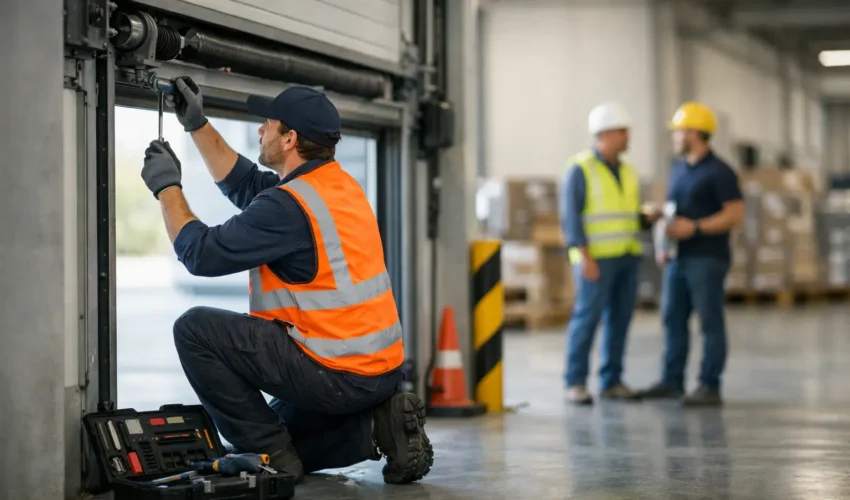
A failed door rarely stays as just a door problem for long. One shutter jams half open, and suddenly you have a security risk, delayed deliveries, staff waiting at the loading bay, or customers struggling to get through the entrance. That is exactly why so many facilities teams ask how to reduce door downtime before a fault turns into a costly disruption.
For commercial and industrial premises, the real issue is not only the repair itself. It is the knock-on effect on operations. A busy warehouse may lose valuable loading time. A retail unit may be left exposed. A medical centre may face accessibility concerns. The right approach is not simply to react faster when something breaks. It is to build a setup that reduces the chances of failure in the first place and shortens recovery time when faults do happen.
How to reduce door downtime starts with prevention
Most door breakdowns do not come out of nowhere. They tend to build up through wear, missed servicing, small alignment issues, damaged safety devices, tired motors, or impact from vehicles and equipment. A door may still open and close for weeks while the underlying fault gets worse.
That is why prevention usually gives the best return. Regular planned maintenance helps spot parts that are beginning to fail before they stop the door entirely. On a roller shutter, that might mean catching worn springs, guides, or control issues early. On an automatic entrance door, it could involve sensor faults, track contamination, or operator wear. On a high-speed door, even minor damage to the curtain or activation system can quickly lead to downtime if it is ignored.
There is a balance to strike here. Some sites assume servicing is an avoidable cost until a major fault proves otherwise. Others over-service doors that see very light use. The practical answer depends on the door type, traffic levels, operating environment, and how critical that opening is to the business.
Match maintenance to how the door is actually used
Not every door on site needs the same attention. A shutter used twice a day on a low-traffic storage unit does not face the same demands as a loading bay door cycling constantly from early morning to late evening. Likewise, an automatic pedestrian entrance in a public-facing building has different safety and access pressures from an internal industrial door.
If you want to reduce downtime, maintenance schedules need to reflect real usage rather than a one-size-fits-all plan. High-cycle doors usually need more frequent inspection because moving parts wear faster. Doors in dusty, damp, or corrosive environments may need closer attention because contamination affects tracks, seals, sensors, and electrical components. Sites with regular forklift movement should also expect higher risk of accidental impact.
A proper site survey helps identify which doors are operationally critical. If one entrance fails, is there a backup route, or does work stop immediately? That question matters. Critical access points should be prioritised for servicing and response planning because the cost of downtime is much higher.
Small faults become major downtime when they are ignored
One of the most common causes of prolonged disruption is delay. A door starts making noise, hesitates during travel, closes unevenly, or occasionally fails to respond. Because it still works most of the time, the fault gets pushed down the list. Then it fails completely at the worst possible moment.
Reporting issues early makes a real difference. Site staff should know what to look for and when to raise a concern. Unusual sounds, slow operation, impact damage, frayed cables, intermittent controls, damaged seals, and unreliable safety edges all deserve attention. Even minor changes in performance can indicate a developing mechanical or electrical problem.
This is especially important on automatic and safety-sensitive doors. A door that is unpredictable is not only inconvenient. It may also create risk for staff, visitors, vehicles, or goods. Early intervention tends to mean shorter repairs, lower cost, and less operational disruption.
Faster repairs depend on better information
When a breakdown happens, response time matters, but so does diagnosis. Engineers can work more efficiently when they arrive with a clear picture of the problem. That sounds basic, but many callouts begin with vague reports such as the door is not working, which can cover anything from a power issue to structural damage.
A better fault report should include the door type, what it is or is not doing, whether the issue is constant or intermittent, whether there has been any recent impact, and whether the controls or safety devices are showing any obvious problems. A quick photo or video can also help identify visible damage before attendance is arranged.
For larger sites with multiple doors, accurate asset records are useful. If each opening has a clear identifier, service history, and basic specification on file, repair decisions become quicker. Engineers can assess likely parts requirements earlier, and facilities teams spend less time trying to explain which door has failed.
How to reduce door downtime with the right repair support
There is a practical difference between a general contractor and a specialist door engineering company. Commercial door systems combine mechanical, electrical, and safety components, and many faults are specific to the type of equipment involved. Roller shutters, automatic sliding doors, dock levellers, sectional doors, and high-speed doors each bring different repair challenges.
If downtime is costly for your site, specialist support is worth having in place before an emergency occurs. That means access to engineers who understand the equipment, carry out proper fault finding, and can advise honestly on whether a repair is sensible or whether replacement is the more reliable option.
Speed matters, but so does getting the fix right. A temporary repair may restore movement quickly, yet still leave the site vulnerable to another stoppage if the root cause has not been addressed. In some cases, a short-term fix is the right call to keep operations moving. In others, it simply delays a repeat failure. Good engineering support should make that distinction clearly.
For businesses across Lanarkshire and Glasgow, local response can also make a difference. Shorter travel times and regional knowledge often mean quicker attendance and better continuity of support, particularly when urgent callouts are needed outside standard hours.
Keep common parts and ageing assets under review
Some downtime problems are really lifecycle problems. If a door is older, heavily used, or based on obsolete components, repair times can stretch because parts are harder to source. In those situations, the issue is not just the fault on the day. It is the lack of a longer-term replacement plan.
That does not mean every older door needs to be replaced immediately. Many can continue to perform well with the right maintenance. But if breakdown frequency is increasing, or if replacement parts are becoming difficult to obtain, it makes sense to review the risk. Planned upgrades are usually easier and cheaper to manage than emergency replacement after a total failure.
On some critical doors, it may also be sensible to keep selected spare parts available, particularly where the same model is used across a site. This is not necessary everywhere, and it only makes sense for doors that are central to operations. Still, for some facilities, having the right motor, sensor, safety edge, or control component close at hand can cut downtime significantly.
Train staff on correct use, not just emergency response
A surprising number of faults are linked to misuse rather than component failure alone. Staff forcing a door, using the wrong controls, blocking sensor paths, or operating equipment before the opening is fully clear can all contribute to breakdowns. Vehicle impacts around loading areas are another common cause.
Basic user awareness helps. Staff do not need technical training, but they should understand how the door is meant to operate, what warning signs to report, and what not to do when a fault occurs. They should also know when a door must be taken out of use rather than repeatedly reset or forced.
This matters because well-meaning attempts to get a door moving again can turn a manageable repair into a larger one. A jammed shutter can suffer more damage if it is forced. An automatic door with a sensor or operator fault may become unsafe if tampered with. Clear procedures reduce that risk.
Downtime falls when responsibility is clear
One simple improvement often gets overlooked: assign ownership. Doors can fall into a grey area between facilities, operations, maintenance teams, and external contractors. When no one has clear responsibility, inspections get missed, faults go unreported, and repair decisions slow down.
It helps to have one point of contact who oversees servicing, records defects, arranges access for engineers, and keeps track of recurring issues. That does not need to be complicated. It just needs to be clear. Consistency is what prevents small operational gaps from becoming repeat downtime.
For many businesses, the most effective approach is a combination of planned maintenance, prompt repair reporting, and access to a dependable emergency response when something does go wrong. That is the practical route to keeping entrances, shutters, and loading points working as they should.
If your doors are critical to security, access, or daily throughput, treat them as operational assets rather than background fixtures. A bit of planning now usually costs far less than a stopped site, a missed delivery window, or a premises left exposed when you need the door to work most.