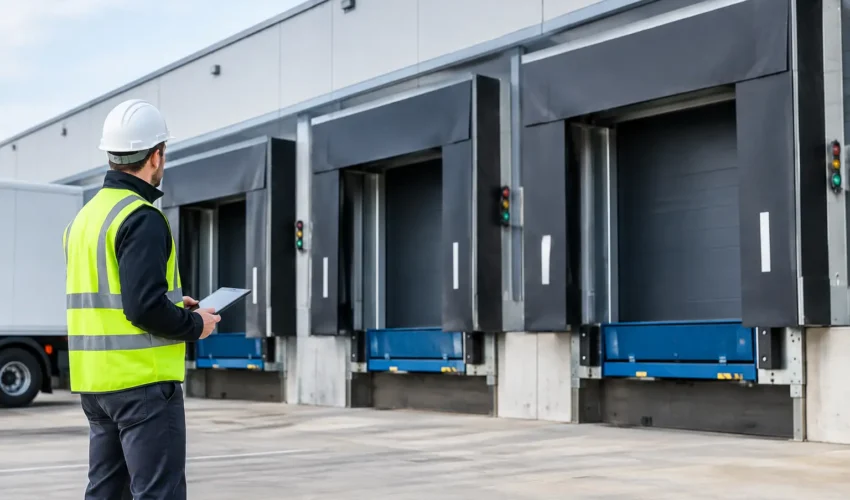
A loading bay can look serviceable until a lorry arrives with a different bed height, a worn dock seal lets rain into stock, or a leveller stops mid-cycle. This Crawford docking systems review looks at what matters when equipment has to work repeatedly under pressure: safe loading, dependable operation, sensible maintenance and an installation that suits the building rather than a catalogue drawing.
For warehouses, distribution centres, manufacturers and retail logistics sites, docking equipment is not simply an add-on to the loading door. It is the working connection between the vehicle and the building. The right arrangement helps keep goods moving, protects staff and reduces heat loss, while the wrong one can create delays, damage and avoidable risk.
Crawford docking systems review: the practical view
Crawford is a recognised name in loading-bay equipment, with solutions commonly specified for commercial and industrial sites that need dock levellers, shelters, seals and associated traffic-control equipment. Its appeal is straightforward: the product range is built around an integrated loading-bay approach rather than treating each part of the bay as a separate purchase.
That matters because a dock door, leveller and shelter need to work together. A high-quality leveller will not solve a poor vehicle interface, and a good seal cannot compensate for a badly positioned door or inadequate yard space. Where the system is correctly surveyed and specified, Crawford equipment can provide a professional, durable loading-bay solution for demanding operations.
The main consideration is that it is not a one-size-fits-all purchase. A busy regional distribution hub, a chilled-food facility and a trade counter receiving occasional pallet deliveries have very different needs. The value of a Crawford installation depends as much on site assessment, fitting quality and future servicing as it does on the equipment selected.
Where Crawford systems tend to perform well
A joined-up loading-bay design
Crawford docking systems are often a strong fit where a business needs to upgrade several elements of the loading bay at once. Matching the leveller, dock door, seals or shelter, controls and safety equipment helps create a more reliable working area. It can also make fault-finding and planned maintenance more straightforward, as the engineer is dealing with a coordinated installation rather than a mixture of unrelated products.
For sites handling frequent vehicle movements, this approach can improve day-to-day efficiency. Warehouse staff should not have to improvise around gaps at the vehicle, uncertain platform positions or damaged perimeter seals. A properly designed bay gives drivers and operatives clearer, repeatable procedures.
Safety features that suit active sites
Loading bays carry obvious risks: vehicle movement, changes in trailer height, forklift traffic and exposed dock edges. A suitable docking system should support safe loading practices through appropriate controls, visible signalling, secure platform operation and protection around the dock opening.
The exact safeguards required will depend on the bay layout and the vehicles using it. For example, a site with regular articulated lorry deliveries may need a different level of vehicle restraint or traffic management from a unit served by rigid vehicles. The point is not to add equipment for its own sake. It is to identify where people, forklifts and vehicles could come into conflict, then specify measures that address those risks.
Durability for regular use
Docking equipment is exposed to knocks, dirt, water and repeated mechanical loading. In Scotland, weather is another practical consideration. Rain, wind and cold can affect the condition of seals, shelters, electrics and moving components if inspections are neglected.
Crawford systems are generally positioned for commercial use rather than light domestic-style applications, which makes them appropriate for busy loading environments. However, durability still relies on selecting the correct capacity and construction for the work involved. A leveller chosen for occasional light deliveries is not the right answer for a bay carrying intensive forklift traffic throughout the day.
Better environmental control at the loading face
Dock shelters and seals can make a noticeable difference to working conditions and energy use, particularly in heated warehouses, temperature-sensitive storage areas and buildings where wind-driven rain is a problem. They help reduce the open gap around a vehicle during loading, limiting drafts and providing better protection for goods and staff.
There is a trade-off. A shelter or seal must suit the range of vehicle heights and body shapes arriving at the premises. If the vehicle fleet is highly varied, an overly tight arrangement may suffer unnecessary wear or fail to form an effective seal. A survey should consider the vehicles actually using the site, not only the ideal vehicle on a specification sheet.
Points to consider before specifying a system
The strongest Crawford docking system can still be the wrong investment if the loading bay has not been assessed carefully. Before choosing equipment, facilities managers should consider delivery frequency, vehicle types, load weights, forklift use, floor level, available yard depth and the condition of the existing dock structure.
Building constraints are particularly important in older industrial units. Pit dimensions, drainage, power supply, approach gradients and headroom can all affect what can be installed. In some cases, repairing or adapting an existing bay may be more cost-effective than a complete replacement. In others, an ageing leveller or damaged shelter may be causing enough downtime to justify a planned upgrade.
Costs should also be judged over the equipment’s service life. Lower initial spend can be tempting, but regular call-outs, poor sealing, lost loading time and damaged goods soon affect the real cost of ownership. A well-specified system with planned servicing is often the more economical route for an operation that depends on reliable deliveries.
Maintenance and repair requirements
No docking system should be treated as fit-and-forget equipment. Dock levellers contain moving parts and hydraulic or mechanical elements that require routine checks. Shelters, seals, guides, buffers and traffic lights also need inspection, especially where vehicle contact is frequent.
Planned maintenance helps identify worn components before they become a failed bay during a delivery window. It also allows engineers to check the operation of safety mechanisms, controls, platform movement and visible structural condition. For a site with several bays, servicing can be scheduled to minimise disruption rather than waiting for an urgent breakdown.
When a fault does occur, response time is critical. A failed leveller, damaged dock door or unsafe bay can hold up stock movements and leave a building vulnerable to weather or unauthorised access. Local engineering support is therefore a significant part of the decision, particularly for businesses across Glasgow, Lanarkshire and the wider central belt. Door Systems Scotland can survey, install, service and repair loading-bay equipment, providing a practical route from initial specification to ongoing support.
Is a Crawford docking system worth the investment?
For high-use loading bays, the answer is often yes, provided the system is correctly matched to the site. Crawford equipment is a credible choice for businesses looking for recognised commercial docking solutions with an emphasis on safe, efficient vehicle-to-building transfer. It is particularly suitable where several loading-bay elements need to operate as one coordinated system.
It may be more than a smaller or low-use premises requires. A business receiving a limited number of deliveries each week might benefit more from a simpler arrangement, targeted repairs or an upgrade to only the components causing problems. Equally, a high-volume warehouse should not under-specify equipment simply to reduce the upfront price.
The best next step is to start with the loading operation itself: what arrives, how often, what is moved and where delays or safety concerns occur. A competent site survey turns those answers into a system that keeps the bay working when the next vehicle is already waiting at the gate.