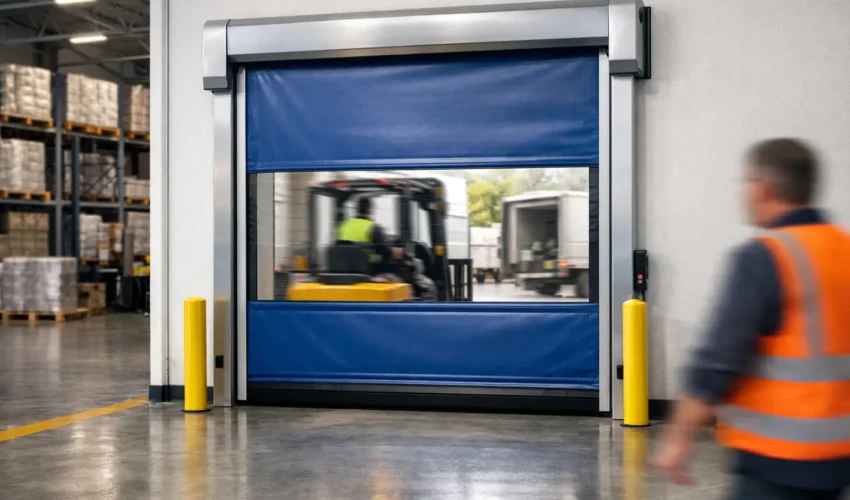
A high speed door that opens half a second too slowly can hold up forklifts, create draughts across a work area, and leave a loading bay exposed longer than it should be. On a busy site, those small delays add up quickly. That is why choosing the best high speed doors is less about brochure claims and more about how the door will perform under real daily pressure.
For warehouses, food facilities, retail stock areas, manufacturing units and commercial premises, the right high speed door should do three things well. It should keep traffic moving, reduce avoidable downtime, and stand up to the environment it works in. The challenge is that no single door suits every opening, and the best option depends on traffic levels, internal conditions, safety requirements and how costly a breakdown would be to your operation.
What makes the best high speed doors?
The best high speed doors are not simply the fastest models on the market. Speed matters, but it is only one part of the decision. A door that cycles quickly but struggles with wind load, takes frequent impact damage, or needs constant callouts may cost more over time than a slightly slower but more dependable system.
In practice, the strongest performers tend to combine quick opening speeds with reliable control systems, effective safety features, durable curtain materials and straightforward maintenance access. They also need to suit the working environment. A distribution depot has very different needs from a chilled production area or a customer-facing service yard.
When we assess high speed doors for commercial and industrial premises, the key question is usually operational fit. How often will the door cycle each day? Is the opening internal or external? Are forklifts passing through continuously? Is temperature control important? Does the site need a door that can recover after impact rather than stopping production for repairs? Those details shape what “best” really means.
Best high speed doors by application
Internal traffic routes
For internal openings, fabric high speed doors are often the strongest choice. They open and close quickly, help separate work zones, and reduce heat loss and airborne contamination between areas. On sites with frequent pedestrian and forklift traffic, they can make movement noticeably smoother.
The best internal doors are usually those with dependable sensors, a responsive control panel and a curtain design that copes with heavy use. If the door is fitted between warehouse zones or between production and dispatch, reliability across repeated cycles is usually more valuable than chasing the highest possible opening speed.
External openings
External high speed doors need more from the structure and curtain. Wind resistance becomes a bigger issue, along with weather exposure and security when the door is shut. In these positions, the best high speed doors are typically models designed specifically for external use, often with reinforced side guides, stronger curtains and more robust sealing.
A standard internal rapid door fitted externally can become a false economy. It may work for a while, but under Scottish weather conditions, especially on exposed sites, it can suffer more wear and more downtime than a properly specified external model.
Food, pharmaceutical and clean environments
Cleanability and environmental control matter more here than outright toughness. Doors in these settings often need smooth surfaces, tight sealing and fast cycle times to support hygiene and temperature stability. The best option may also depend on washdown requirements and whether staff need good visibility through the opening.
This is one of those areas where specification matters. A door that is perfectly suitable for general warehousing may not be right for a controlled environment, even if the dimensions look similar on paper.
High-impact areas
If forklift strikes are likely, self-repairing high speed doors are worth serious attention. These doors are designed so the curtain can come out of its guides on impact and reset, rather than turning a minor collision into a repair job. For many sites, that feature alone can justify the investment.
Where traffic is relentless, the best high speed doors are often the ones that recover quickly from the kind of accidental knocks that happen in real workplaces.
Features worth paying for
Not every add-on is necessary, but some features have a direct effect on performance and running costs.
Opening speed and closing speed both matter. A fast open gets vehicles and staff through efficiently, but a prompt close is what helps with temperature control, cleanliness and security. Safety systems are equally important. Light curtains, photocells and edge safety features should be chosen to match the traffic using the opening.
Control options can also make a significant difference. Radar activation, pull cords, push buttons, induction loops and remote access controls each suit different uses. A poorly chosen activation method can slow traffic or trigger unnecessary cycles. The best setup is usually the one that matches how the site actually works, not the one with the longest features list.
Curtain material, visibility panels and wind resistance should also be considered together. Clear vision sections can improve safety in busy traffic routes, but they need to suit the working environment and cleaning routine. For external doors, wind class and frame construction deserve close attention.
Best high speed doors and long-term value
A common mistake is to judge doors mainly on purchase price. The better measure is total cost over time. A cheaper door that needs repeated engineer visits, suffers damage easily, or causes delays in operation can become more expensive than a higher-quality installation.
The best high speed doors usually offer value in three ways. They reduce wasted time, they help control the internal environment, and they limit disruption caused by faults or impact. That matters whether you run a warehouse in Lanarkshire, a retail service area in Glasgow, or a production facility where every stoppage affects output.
Planned maintenance is part of that value. High speed doors are working assets, not passive barriers. They cycle constantly, rely on safety devices, and need regular servicing to stay dependable. If a door is critical to your operation, maintenance support should be part of the buying decision from the start.
Choosing the right manufacturer and installer
Product quality matters, but installation quality matters just as much. Even one of the best high speed doors can underperform if it is badly specified, poorly installed or left without proper aftercare.
That is why site survey work is important. Opening dimensions, headroom, side room, floor condition, traffic flow and surrounding structure all need checking before a recommendation is made. This is especially true where the door must integrate with existing shutters, loading bays or access systems.
Manufacturer reputation is worth considering as well. Recognised names such as Dynaco and Crawford are often chosen because their systems are proven in demanding environments and backed by available parts and technical support. That does not mean every model from every leading brand is right for every site, but it does reduce the risk of ending up with an unsupported or unsuitable system.
A local engineering-led installer also adds practical value. If the door fails, you need a prompt response, not a long chain of subcontractors and delays. For businesses where downtime affects deliveries, security or customer access, that support can be just as important as the door specification itself.
When the best high speed doors may not be the answer
It is worth saying that a high speed door is not always the correct solution. If an opening has low traffic, strict security demands after hours, or needs stronger physical resistance, an industrial roller shutter or another door type may be more appropriate. Some sites also benefit from a combination, such as a high speed door behind a security shutter.
This is where an honest assessment matters. The best advice is not always the most expensive option. It is the option that suits the building, the operation and the level of risk.
Questions to ask before you decide
Before choosing a system, ask how many cycles the door will complete each day, what happens if it fails, whether impact damage is likely, and how important heat retention or hygiene control is. Also ask who will service it, how quickly repairs can be attended to, and whether replacement parts are readily available.
Those answers usually tell you more than any sales sheet. They turn the discussion from product features into operational priorities, which is where a good buying decision is made.
For many businesses, the best high speed doors are the ones that become part of the working day without drawing attention to themselves. They open when needed, close safely, cope with heavy use and stay reliable over time. If you are specifying a door for a busy commercial or industrial site, that kind of dependable performance is what really pays off. A careful survey and the right engineering advice at the start usually save far more trouble than they cost later.